 EN
EN


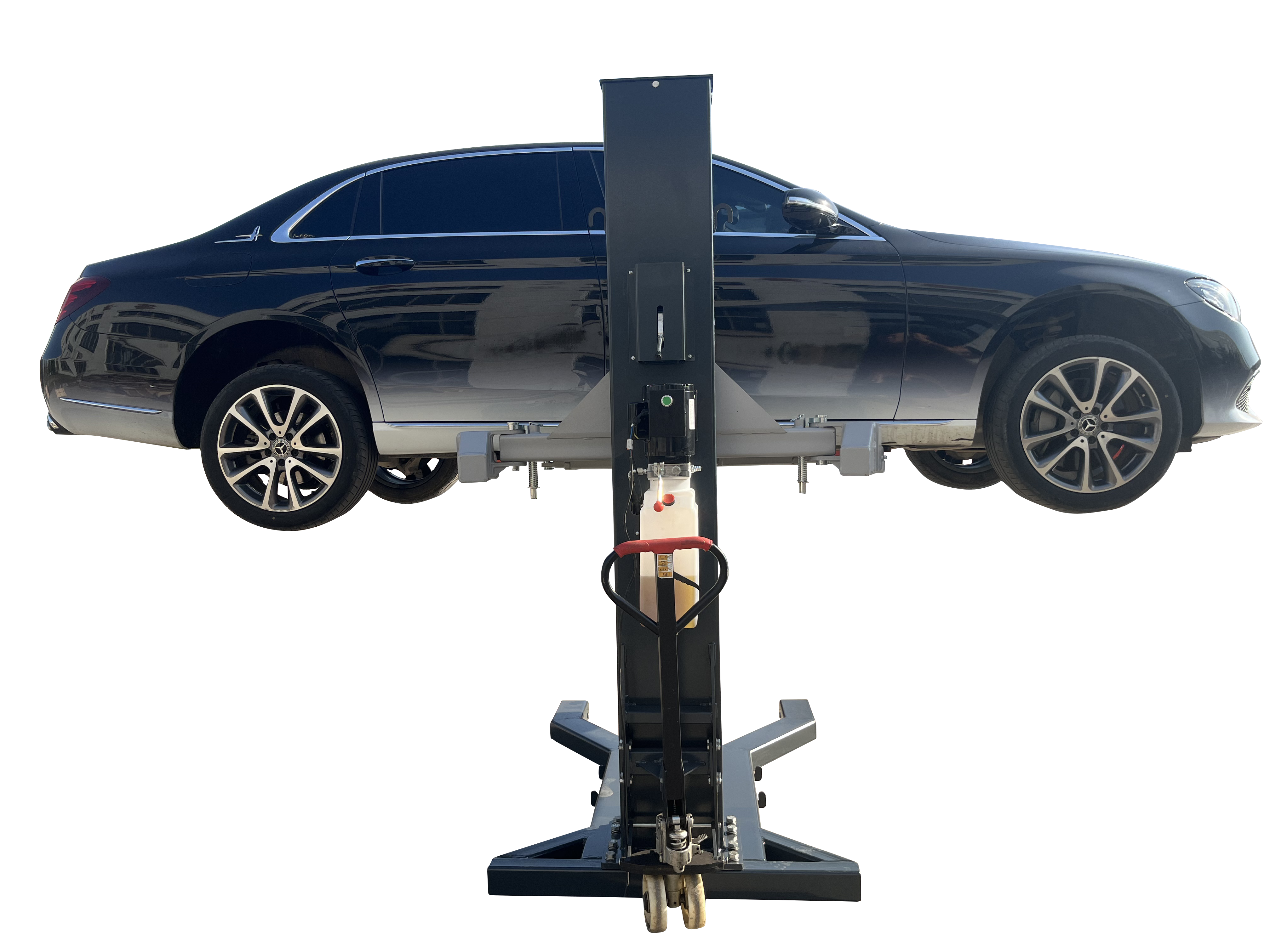
When floor space is at a premium, every square foot of a garage or workshop matters. The Single Post Car Lift has emerged as one of the most discussed solutions for operators who need to service or store vehicles without sacrificing the working area around them. But is it genuinely the best space-saving option, or does that reputation depend heavily on the specific use case? Understanding where this lift excels — and where it has real limitations — is essential before committing to an installation.
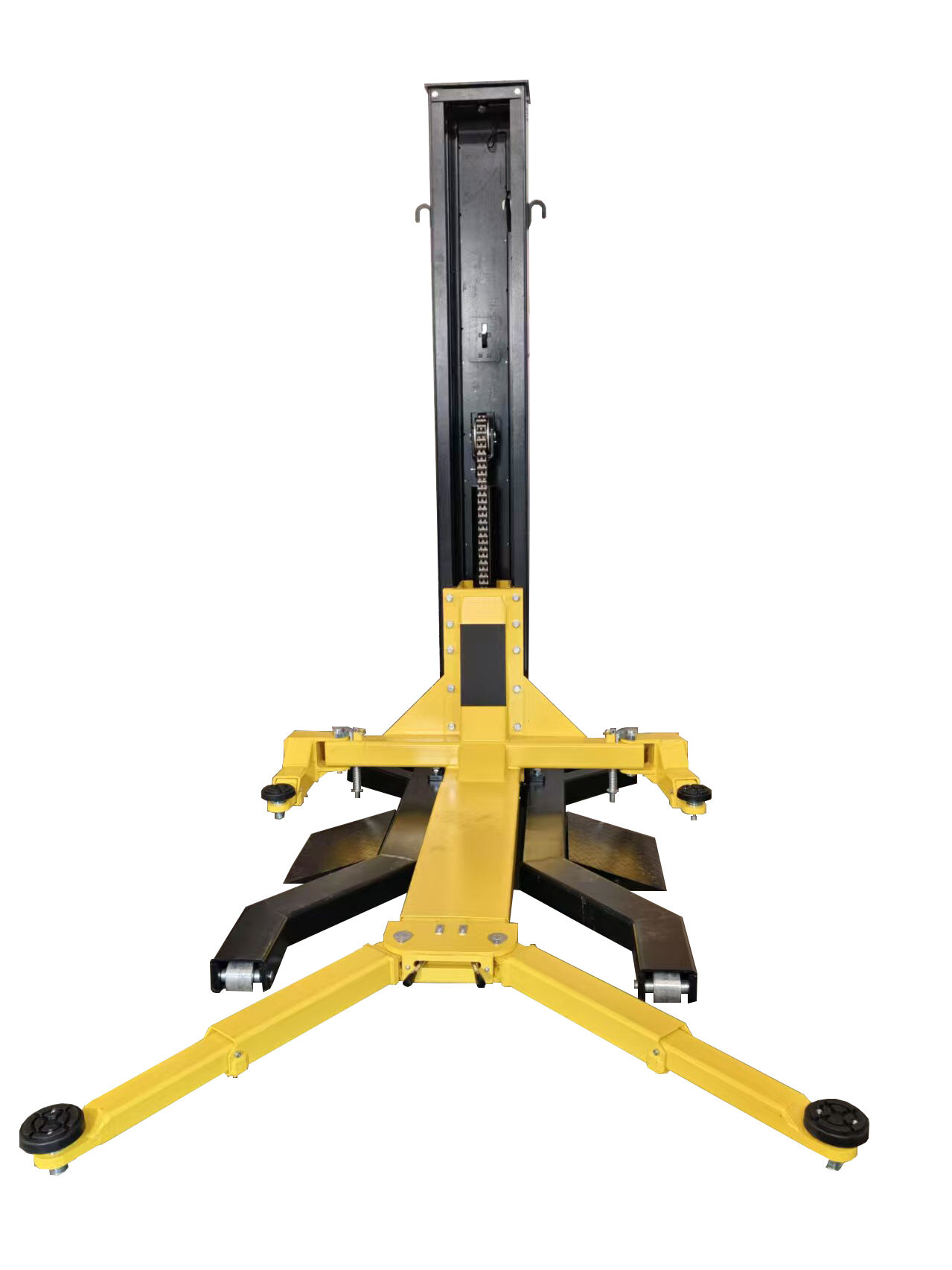
A Single Post Car Lift operates from a single central column, lifting a vehicle from a single mounting point rather than using two or four posts spread across the bay. This fundamental design difference is what drives its space efficiency. Because there are no outrigger posts occupying the corners or sides of the bay, technicians and hobbyists retain far more usable floor space around the vehicle. That said, the suitability of a Single Post Car Lift depends on the type of work being performed, the vehicles being serviced, and the physical constraints of the facility in question.
Understanding the Single Post Car Lift Design
How the Single Column Architecture Works
The defining feature of a Single Post Car Lift is its single-column structure, which anchors directly into the floor and extends vertically to support the vehicle above. The lifting arm or platform extends from this central post and connects to the vehicle's designated lift points. This design eliminates the need for a crossbar or secondary columns, which is precisely what makes the footprint so compact.
Because the entire mechanical assembly is concentrated in one column, the Single Post Car Lift requires a smaller concrete anchor zone compared to multi-post alternatives. The installation footprint is dramatically reduced, which is a significant advantage in tight bays, residential garages, or facilities where multiple lifts need to coexist in a limited area.
The lifting mechanism itself — whether hydraulic or electro-hydraulic — is housed within or adjacent to the single post, keeping the operational envelope clean and predictable. Operators can walk freely around all four sides of the raised vehicle, which is a practical benefit that two-post and four-post lifts cannot always match in narrow bays.
Weight Capacity and Vehicle Compatibility
A common question about the Single Post Car Lift concerns its load capacity relative to its compact design. Modern single-post models are engineered to handle a wide range of passenger vehicles, light trucks, and SUVs, with many units rated for capacities that comfortably cover the majority of consumer and light commercial vehicles.
However, the Single Post Car Lift is generally best suited for vehicles with clearly defined and accessible lift points. Proper vehicle positioning is critical because the load is distributed through a single contact zone rather than spread across multiple arms. Technicians must follow manufacturer guidelines carefully to ensure safe and stable lifting, particularly with heavier or longer vehicles.
For facilities that primarily service standard passenger cars and crossovers, the Single Post Car Lift offers a highly practical combination of capacity and compactness. For shops handling heavy-duty trucks or specialty vehicles with unusual weight distributions, a different lift configuration may be more appropriate.
Primary Use Cases Where the Single Post Car Lift Excels
Residential Garages and Home Workshops
The residential garage is arguably the environment where the Single Post Car Lift delivers its most compelling value. Most home garages are designed for parking, not servicing, which means the available floor area is already constrained by walls, storage, and the vehicles themselves. A two-post lift in a standard two-car garage can make the space feel cramped and limit what work can actually be performed.
The Single Post Car Lift changes that equation. By anchoring to a single floor point and keeping the structural footprint minimal, it allows a homeowner or enthusiast to raise a vehicle for oil changes, brake work, suspension inspections, or detailing without consuming the entire bay. The remaining floor space stays accessible for tools, equipment, and movement.
For car enthusiasts who want a professional-grade lift experience at home without converting their garage into a dedicated shop, the Single Post Car Lift represents a genuinely practical investment. It brings workshop capability into a domestic setting without requiring a facility redesign.
Small Commercial Shops and Quick-Service Bays
In small commercial operations — independent repair shops, quick-lube facilities, tire centers, and detailing studios — bay efficiency directly affects throughput and revenue. Every square foot that a lift occupies is a square foot that cannot be used for another vehicle, a parts cart, or a technician working on an adjacent job.
The Single Post Car Lift allows small shops to install lifting capability in bays that would otherwise be too narrow for a conventional two-post lift. This can effectively increase the number of serviceable bays within an existing building footprint, which has a direct impact on daily vehicle capacity without requiring expensive facility expansion.
Quick-service operations benefit particularly from the open-access design of the Single Post Car Lift. Technicians can approach the vehicle from any angle, which speeds up routine maintenance tasks and reduces the time spent repositioning around post obstructions. In a high-volume environment, those minutes add up to meaningful productivity gains.
Vehicle Storage and Stacking Applications
Beyond active servicing, the Single Post Car Lift is also used in vehicle storage contexts where the goal is to stack or elevate a vehicle to free up floor space for another. Collectors, dealerships with limited lot space, and urban parking facilities have all explored single-post configurations for this purpose.
In a storage scenario, the Single Post Car Lift allows one vehicle to be elevated while a second vehicle occupies the space beneath or adjacent to it. This vertical use of space is particularly valuable in urban environments where land costs are high and horizontal expansion is not feasible.
It is worth noting that storage applications require careful attention to the lift's rated capacity and the stability requirements for extended hold times. Not all Single Post Car Lift models are designed for long-duration storage, so operators should verify the intended use case with the manufacturer's specifications before deploying a unit in this way.
Comparing Space Efficiency Against Other Lift Types
Single Post vs. Two-Post Lifts
The two-post lift is the most common lift type in professional automotive service environments, and for good reason — it offers excellent access to the undercarriage, strong weight capacity, and a well-understood installation process. However, the two posts occupy fixed positions on either side of the vehicle, which limits how the surrounding space can be used and requires a minimum bay width to function safely.
The Single Post Car Lift eliminates the side-column constraint entirely. In a bay where a two-post lift would leave only narrow corridors on each side, a single-post installation leaves the full width of the bay open. For shops where technicians need to work simultaneously on adjacent vehicles, or where equipment needs to be rolled in from the side, this difference is operationally significant.
The trade-off is that the Single Post Car Lift requires precise vehicle positioning and careful attention to lift point alignment, whereas a two-post lift offers more flexibility in how the arms are positioned under the vehicle. For experienced technicians, this is a manageable requirement. For less experienced users, it demands a more disciplined workflow.
Single Post vs. Four-Post Lifts
Four-post lifts are favored for alignment work, storage, and situations where the vehicle needs to rest on its wheels while elevated. They are stable, easy to load, and require minimal vehicle-specific setup. However, their four-column footprint is the largest of any common lift type, and they are generally not suitable for facilities where space is a primary concern.
The Single Post Car Lift occupies a fraction of the floor area that a four-post unit requires. For a shop that needs undercarriage access rather than wheel-on elevation, the single-post design is far more space-efficient and provides better access to the vehicle's underside. For alignment or storage applications where wheel contact is necessary, the four-post remains the more appropriate choice.
The decision between these two lift types ultimately comes down to the primary task. If the dominant use case involves undercarriage service in a space-constrained environment, the Single Post Car Lift is the stronger candidate. If the facility has adequate space and the work requires wheel-on elevation, a four-post configuration may serve better.
Installation Considerations for the Single Post Car Lift
Floor Requirements and Anchor Specifications
Because the Single Post Car Lift concentrates all structural load through a single anchor point, the floor requirements are specific and non-negotiable. The concrete slab must meet minimum thickness and compressive strength specifications as defined by the lift manufacturer. Inadequate floor preparation is one of the most common causes of installation problems and safety risks with single-post designs.
Before installation, operators should obtain a concrete assessment to confirm that the slab meets the required specifications. In facilities with older or thinner concrete, reinforcement or slab replacement may be necessary. This is a one-time investment that protects both the equipment and the personnel using it.
The anchor bolt pattern for a Single Post Car Lift is compact by design, but the bolts themselves must be installed with precision. Misaligned anchors can introduce stress concentrations that compromise the lift's long-term structural integrity. Professional installation by a qualified technician is strongly recommended, particularly for commercial applications.
Ceiling Height and Vertical Clearance
The Single Post Car Lift requires adequate vertical clearance to raise a vehicle to a working height that allows comfortable undercarriage access. The minimum ceiling height depends on the lift's maximum rise specification and the height of the tallest vehicle being serviced. Operators should calculate the combined height of the raised vehicle plus the lift's collapsed height to confirm that the installation space is suitable.
In residential garages with standard eight-foot ceilings, some Single Post Car Lift models may not achieve the full working height that a professional shop would expect. However, many manufacturers offer models with adjustable rise ranges specifically designed for lower-ceiling environments, making it possible to find a unit that fits the available vertical space.
Ceiling obstructions such as beams, HVAC ducts, and lighting fixtures must also be accounted for. The vehicle's roof and any roof-mounted accessories must clear all overhead obstacles at maximum lift height. A thorough site survey before purchase prevents costly surprises during installation.
Is the Single Post Car Lift the Best Space-Saving Solution?
When the Answer Is Yes
For the right use case, the Single Post Car Lift is genuinely the best space-saving lift solution available. In residential garages, narrow commercial bays, and facilities where multiple lifts need to coexist in a limited footprint, no other lift type matches the combination of compact installation area, full undercarriage access, and practical working clearance that a single-post design provides.
The Single Post Car Lift is also the best choice when the primary goal is to preserve lateral floor space for technician movement, equipment access, or adjacent vehicle work. Its open-perimeter design is a genuine operational advantage in environments where workflow efficiency matters as much as lifting capability.
For enthusiasts and small shop owners who want professional lifting capability without a major facility investment, the Single Post Car Lift offers an accessible entry point. The installation requirements are manageable, the operational learning curve is reasonable, and the space savings are immediately apparent once the unit is in use.
When Other Solutions May Be More Appropriate
The Single Post Car Lift is not the universal answer for every facility or every task. Shops that primarily handle heavy-duty vehicles, perform alignment work, or need to service vehicles with non-standard lift point configurations may find that a two-post or four-post lift better matches their operational requirements.
Facilities with inadequate floor slabs, very low ceilings, or high daily vehicle volumes may also encounter limitations with a single-post installation. In these cases, the space savings may not outweigh the operational constraints, and a different lift type may deliver better overall value.
The honest answer to whether the Single Post Car Lift is the best space-saving solution is: it depends on the use case. For the scenarios where it fits, it is hard to beat. For scenarios outside its design envelope, it is better to choose a lift that matches the actual operational demands rather than optimizing for space at the expense of functionality.
FAQ
What types of vehicles are best suited for a Single Post Car Lift?
A Single Post Car Lift is best suited for standard passenger cars, crossovers, and light SUVs with clearly defined manufacturer lift points. Vehicles with accessible and well-distributed lift points are the easiest to work with on a single-post design. Heavy-duty trucks, vehicles with unusual weight distributions, or specialty vehicles may require a different lift configuration for safe and stable operation.
How much floor space does a Single Post Car Lift actually save compared to a two-post lift?
The space savings depend on the specific models being compared, but in general a Single Post Car Lift eliminates the two side columns that a two-post lift requires, freeing up the lateral floor area on both sides of the vehicle. In a standard bay, this can recover several feet of usable width on each side, which is significant in narrow or multi-lift environments. The single anchor footprint also reduces the concrete preparation area compared to a two-post installation.
Can a Single Post Car Lift be installed in a residential garage with a standard concrete slab?
It depends on the slab's thickness and compressive strength. Many residential slabs meet the minimum requirements for a Single Post Car Lift, but this should be verified before purchase. The manufacturer's installation specifications will define the minimum concrete requirements, and a professional assessment of the existing slab is recommended. If the slab does not meet the requirements, reinforcement or replacement may be necessary before installation can proceed safely.
Is a Single Post Car Lift suitable for long-term vehicle storage?
Some Single Post Car Lift models are designed to support extended hold times for storage applications, while others are intended primarily for active service use. Operators should review the manufacturer's specifications carefully to confirm whether the unit is rated for storage use. For long-term storage, the lift's locking mechanism, hydraulic integrity, and rated hold capacity are all important factors to evaluate before committing to this application.
Table of Contents
- Understanding the Single Post Car Lift Design
- Primary Use Cases Where the Single Post Car Lift Excels
- Comparing Space Efficiency Against Other Lift Types
- Installation Considerations for the Single Post Car Lift
- Is the Single Post Car Lift the Best Space-Saving Solution?
-
FAQ
- What types of vehicles are best suited for a Single Post Car Lift?
- How much floor space does a Single Post Car Lift actually save compared to a two-post lift?
- Can a Single Post Car Lift be installed in a residential garage with a standard concrete slab?
- Is a Single Post Car Lift suitable for long-term vehicle storage?