 EN
EN


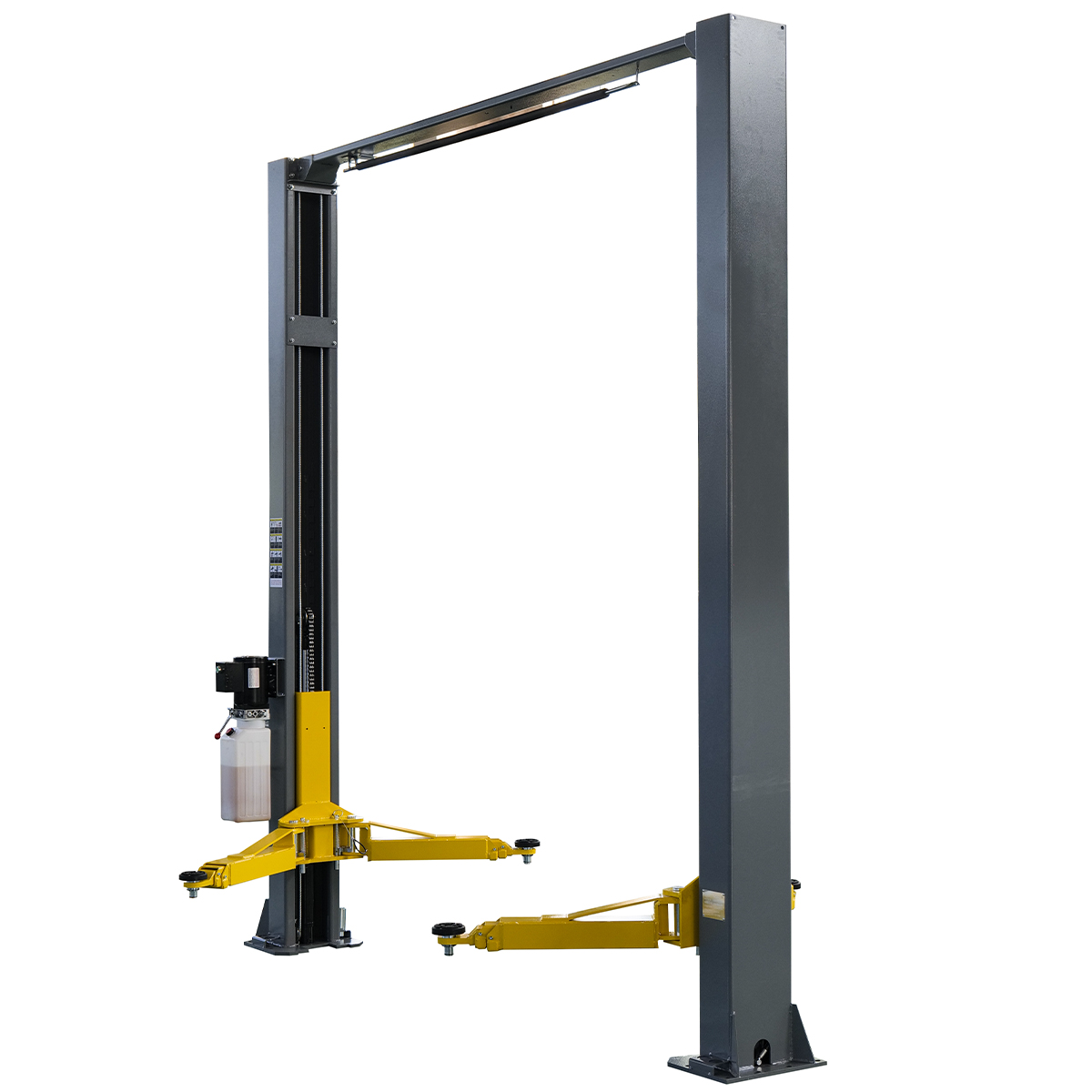
Choosing the right 2 Post Car Lift is one of the most consequential decisions a garage owner, automotive technician, or serious enthusiast will make. The right lift transforms your workspace, improves safety, and dramatically increases the range of service work you can perform. The wrong choice, however, can lead to costly installation problems, safety hazards, and equipment that simply does not match your operational needs. This guide is designed to walk you through every critical factor so you can make a confident, well-informed decision.
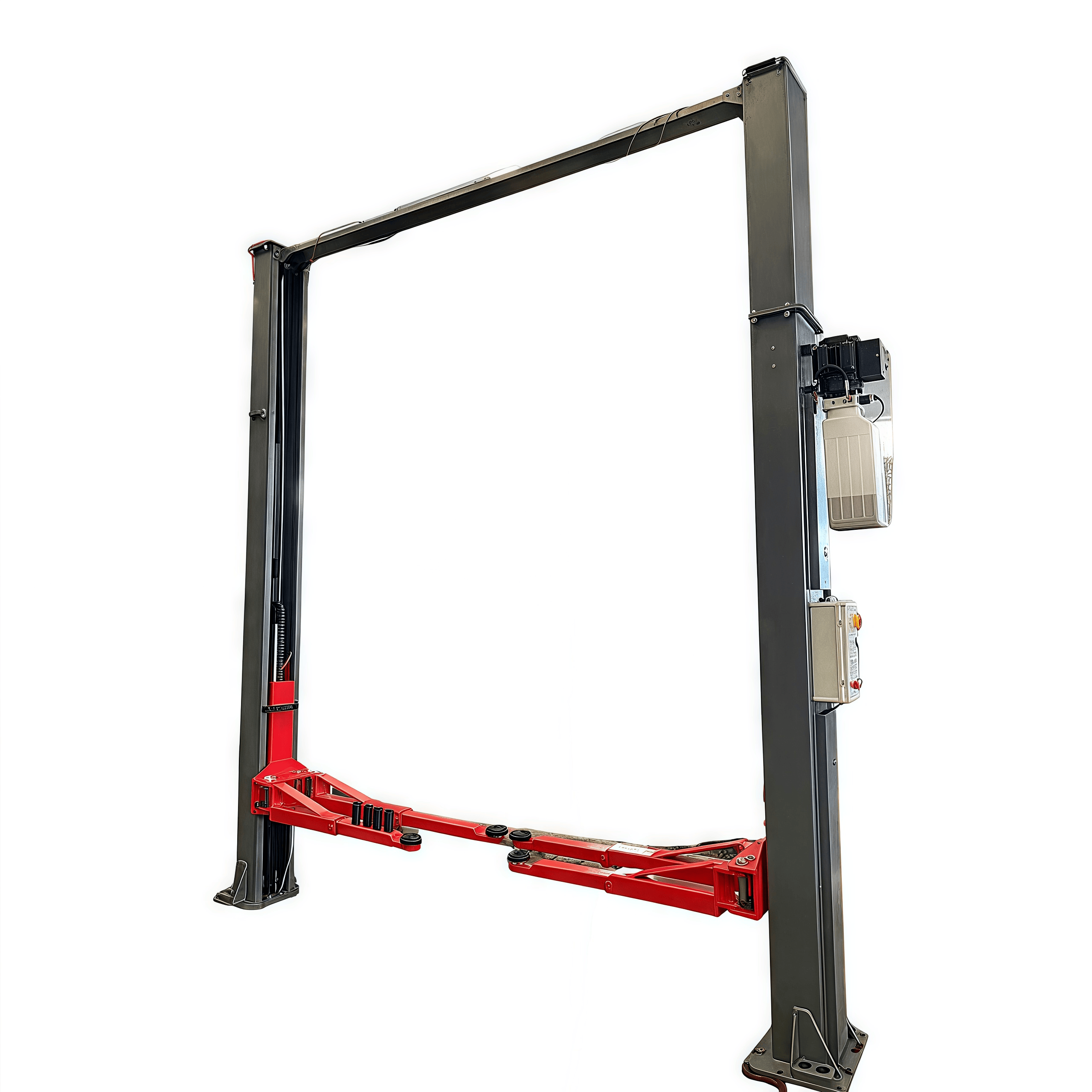
A 2 Post Car Lift is the most widely used lift configuration in professional and semi-professional automotive environments. Its open-floor design, versatile lifting capacity, and relatively compact footprint make it a practical solution for a broad range of vehicles and service tasks. Whether you are outfitting a commercial repair shop or upgrading a home garage, understanding the key selection criteria will ensure you invest in equipment that delivers long-term value and reliable performance.
Understanding the 2 Post Car Lift and Its Core Advantages
What Sets the 2 Post Car Lift Apart
The 2 Post Car Lift operates using two vertical columns anchored to the floor, with swing arms that extend beneath the vehicle's frame or pinch weld points. This design leaves the entire floor area beneath the vehicle completely open, giving technicians unrestricted access to the undercarriage, exhaust system, suspension components, and drivetrain. That open-floor advantage is one of the primary reasons this lift type dominates professional shop environments.
Unlike four-post lifts, which use runways and are better suited for storage or alignment work, the 2 Post Car Lift is optimized for hands-on mechanical service. The ability to walk freely under a raised vehicle without navigating around structural obstacles significantly speeds up workflow and reduces technician fatigue. For shops where throughput and efficiency are priorities, this design advantage translates directly into business value.
The 2 Post Car Lift also tends to occupy less floor space than comparable four-post models, making it a practical choice for garages where square footage is limited. The two-column footprint allows other equipment and workstations to be positioned nearby without creating congestion, which is a meaningful consideration when planning a functional shop layout.
Common Applications and Use Cases
A 2 Post Car Lift is suitable for a wide range of service tasks including oil changes, brake work, suspension repairs, exhaust replacement, transmission service, and general undercarriage inspection. Its versatility makes it the default choice for general automotive repair shops that handle a diverse mix of vehicles and service types throughout the day.
In home garages and enthusiast workshops, the 2 Post Car Lift enables the kind of thorough, professional-quality work that was previously only possible in commercial settings. Hobbyists who restore classic cars, performance enthusiasts who regularly modify their vehicles, and serious DIY mechanics all benefit from the access and stability this lift configuration provides.
Commercial tire shops, quick-lube operations, and independent repair facilities rely on the 2 Post Car Lift as a core piece of infrastructure. Its combination of speed, accessibility, and lifting capacity aligns well with high-volume service environments where minimizing vehicle turnaround time is essential to profitability.
Key Specifications to Evaluate Before Buying
Lifting Capacity and Vehicle Compatibility
Lifting capacity is the first specification to evaluate when selecting a 2 Post Car Lift. Capacity ratings typically range from around 7,000 pounds for light-duty residential models up to 12,000 pounds or more for heavy-duty commercial units. Choosing a lift with adequate capacity for the heaviest vehicles you regularly service is not just a performance consideration — it is a fundamental safety requirement.
It is important to match the lift's rated capacity to your actual vehicle mix rather than simply selecting the lowest-cost option that technically covers your current needs. If your shop services trucks, SUVs, or larger crossovers alongside standard passenger cars, a higher-capacity 2 Post Car Lift provides the operational flexibility to handle that range without compromise. Overloading a lift, even occasionally, accelerates wear and creates serious safety risks.
Vehicle wheelbase and overall length also factor into compatibility. Longer vehicles require swing arms with sufficient reach to position correctly under the manufacturer-specified lift points. Before purchasing a 2 Post Car Lift, verify that the arm extension range accommodates the longest vehicles in your service mix, particularly if you work on full-size trucks or extended-wheelbase vans.
Overhead Height and Ceiling Clearance
Ceiling height is a constraint that many buyers underestimate until they are mid-installation. A 2 Post Car Lift requires sufficient overhead clearance not only for the columns themselves but also for the vehicle at full lift height. Standard lifts typically require a minimum ceiling height of around 11 to 12 feet, though this varies by model and the height of the vehicles being serviced.
Taller vehicles such as trucks and SUVs require additional clearance at full lift height. If your garage ceiling is on the lower end of the acceptable range, carefully review the manufacturer's specifications for maximum raised height and factor in the roof height of the tallest vehicle you plan to lift. Selecting a 2 Post Car Lift without this calculation can result in a unit that physically cannot raise certain vehicles to a safe and practical working height.
Some manufacturers offer low-ceiling or 'low-rise' variants of the 2 Post Car Lift designed specifically for spaces with height constraints. These models sacrifice some maximum lift height in exchange for compatibility with lower ceilings, which can be a practical solution for residential garages or older commercial buildings with limited overhead clearance.
Structural and Installation Considerations
Floor Requirements and Anchor Integrity
A 2 Post Car Lift places significant concentrated loads on the floor at the base of each column. Most manufacturers specify a minimum concrete thickness — commonly four to six inches — and a minimum concrete strength rating, typically expressed in PSI. Installing a 2 Post Car Lift on a floor that does not meet these specifications is a serious structural and safety risk that can result in column movement, anchor failure, or catastrophic lift collapse.
Before installation, have your concrete floor evaluated if there is any uncertainty about its thickness or condition. Cracks, spalling, or areas of compromised concrete near the planned installation points should be addressed before the lift is anchored. The anchor bolts used to secure a 2 Post Car Lift are a critical component of the entire system's structural integrity, and they must be installed correctly according to the manufacturer's torque and depth specifications.
The distance between the two columns must also be set correctly during installation. Column spacing affects arm reach and vehicle centering, and deviating from the manufacturer's recommended spacing can compromise both the lift's performance and its safety margins. Taking time to plan the installation layout carefully before drilling anchor holes is always worthwhile.
Symmetrical vs. Asymmetrical Column Design
One of the most important structural choices when selecting a 2 Post Car Lift is whether to choose a symmetrical or asymmetrical column configuration. In a symmetrical design, the front and rear arms are equal in length, and the vehicle is centered between the columns. In an asymmetrical design, the columns are rotated so that the rear arms are longer than the front arms, positioning the vehicle slightly rearward of center.
The asymmetrical 2 Post Car Lift is generally preferred for passenger cars and light trucks because it allows the vehicle's doors to open fully without contacting the columns. This is a significant practical advantage in busy shop environments where technicians frequently need to access the vehicle interior during service. The asymmetrical design also tends to position the vehicle's center of gravity more favorably relative to the lift points.
Symmetrical designs are better suited for vehicles with a more evenly distributed weight balance or for applications where the technician does not need frequent door access. Understanding which configuration aligns with your typical service workflow will help you select a 2 Post Car Lift that supports rather than complicates your daily operations.
Safety Features and Certification Standards
Mechanical Safety Locks and Hydraulic Systems
Safety is non-negotiable when evaluating any 2 Post Car Lift. Mechanical safety locks — also called automatic safety locks or ladder locks — are a standard feature on quality lifts and serve as the primary protection against hydraulic failure. These locks engage automatically as the lift rises, holding the carriage at fixed intervals so that a hydraulic pressure loss does not result in an uncontrolled descent.
The quality and reliability of the hydraulic system itself is equally important. Look for a 2 Post Car Lift with a robust hydraulic power unit, quality seals, and a design that minimizes the risk of fluid leaks. Single-point hydraulic connection systems, which synchronize both columns through a single hydraulic circuit, are generally more reliable and easier to maintain than dual-cylinder systems that require manual synchronization.
Electric release mechanisms add a layer of convenience and safety by allowing the technician to lower the lift smoothly and in a controlled manner without manually disengaging each safety lock. This feature reduces the physical effort required during operation and minimizes the risk of accidental release, making it a worthwhile consideration when comparing 2 Post Car Lift models.
Certification and Compliance Standards
Certification by a recognized testing authority is one of the clearest indicators of a 2 Post Car Lift's safety and quality. In North America, the Automotive Lift Institute (ALI) certification program is the industry benchmark. ALI-certified lifts have been independently tested and verified to meet the performance and safety requirements of the ANSI/ALI ALCTV standard, which covers construction, testing, and validation of automotive lifts.
Purchasing a certified 2 Post Car Lift also has practical implications for insurance and liability. Many commercial insurance policies and workplace safety regulations require that lifting equipment meet recognized certification standards. Using non-certified equipment can create compliance issues and may affect coverage in the event of an incident.
Beyond certification, review the manufacturer's warranty terms and the availability of replacement parts and technical support. A 2 Post Car Lift is a long-term investment, and the ability to source parts and obtain service support years after purchase is a meaningful factor in the total cost of ownership. Established manufacturers with documented support infrastructure provide greater long-term value than lower-cost alternatives with limited after-sale support.
Matching the Right 2 Post Car Lift to Your Specific Environment
Commercial Shop vs. Home Garage Selection Logic
The selection criteria for a 2 Post Car Lift differ meaningfully between commercial and residential applications. In a commercial shop, duty cycle — the frequency and duration of daily use — is a primary consideration. Commercial-grade lifts are engineered for continuous use across multiple shifts and are built with heavier components, more robust hydraulic systems, and greater structural margins than residential models.
For a home garage or enthusiast workshop, a professional-grade 2 Post Car Lift is still the recommended choice over entry-level alternatives, but the specific capacity and duty cycle requirements may be more modest. A homeowner who lifts vehicles a few times per week for personal maintenance has different operational demands than a shop that cycles through dozens of vehicles daily. Matching the lift's design specifications to your actual usage pattern avoids both overspending and under-specifying.
Budget is always a factor, but it should be evaluated in the context of total cost of ownership rather than purchase price alone. A higher-quality 2 Post Car Lift that lasts fifteen or twenty years with minimal maintenance represents better value than a lower-cost unit that requires frequent repairs or early replacement. Factor in installation costs, any required floor preparation, and ongoing maintenance when comparing options.
Planning for Future Needs and Workflow Expansion
When selecting a 2 Post Car Lift, it is worth thinking beyond your immediate needs and considering how your vehicle mix or service scope might evolve. If you currently service only passenger cars but anticipate adding light trucks or larger SUVs to your workload, choosing a lift with a higher capacity rating now avoids the cost and disruption of replacing equipment later.
Similarly, if you plan to expand your shop or add additional lift bays, selecting a consistent lift model across your facility simplifies training, parts inventory, and maintenance procedures. Standardizing on a single 2 Post Car Lift model reduces operational complexity and allows technicians to work efficiently across all bays without adapting to different equipment configurations.
Accessories and optional features — such as drip trays, additional arm pads, or rolling jack trays — can extend the utility of a 2 Post Car Lift and should be considered as part of the overall purchase decision. Some manufacturers offer accessory packages that provide better value than purchasing individual items separately, so reviewing the full accessory catalog before finalizing your order is a practical step.
FAQ
What is the minimum ceiling height required for a 2 Post Car Lift?
Most standard 2 Post Car Lift models require a minimum ceiling height of approximately 11 to 12 feet, but this varies by manufacturer and model. You must also account for the height of the tallest vehicle you plan to lift at full extension. Always review the specific model's installation requirements and measure your ceiling height before purchasing.
How thick does my concrete floor need to be for a 2 Post Car Lift installation?
The majority of 2 Post Car Lift manufacturers specify a minimum concrete thickness of four inches, with many recommending six inches for heavier-capacity models. The concrete must also meet a minimum compressive strength, typically 3,000 PSI. If your floor does not meet these requirements, reinforcement or resurfacing may be necessary before installation can proceed safely.
What is the difference between a symmetrical and asymmetrical 2 Post Car Lift?
A symmetrical 2 Post Car Lift has equal-length front and rear arms, centering the vehicle between the columns. An asymmetrical design rotates the columns so the rear arms are longer, positioning the vehicle slightly rearward. The asymmetrical configuration is generally preferred for passenger vehicles because it allows full door opening without the doors contacting the columns during service.
Is ALI certification important when choosing a 2 Post Car Lift?
ALI certification is a strong indicator of quality and safety compliance. It means the 2 Post Car Lift has been independently tested against the ANSI/ALI ALCTV standard, which covers structural integrity, performance, and safety. For commercial operations, certified equipment is often required by insurance policies and workplace safety regulations, making certification a practical necessity rather than just a quality signal.