 EN
EN

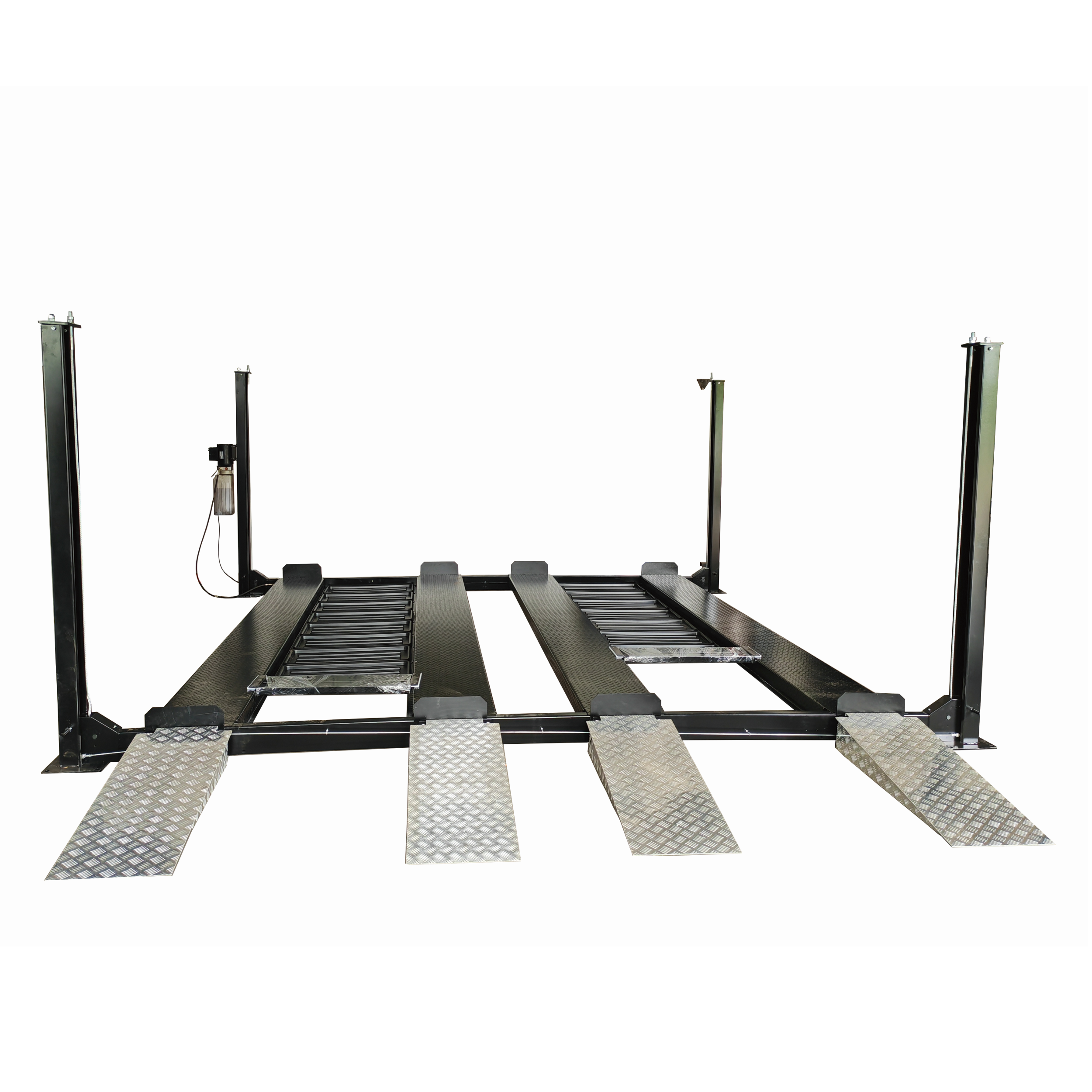
When outfitting a professional garage or a serious home workshop, the equipment you choose defines the quality and efficiency of every job you take on. Among the most important investments a technician or garage owner can make is selecting the right vehicle lift. The 4 Post Car Lift has become a trusted standard in workshops that demand reliability, stability, and versatility for both extended repair work and long-term vehicle storage. Understanding exactly why this lift excels in those two specific use cases can help you make a smarter, more confident purchasing decision.
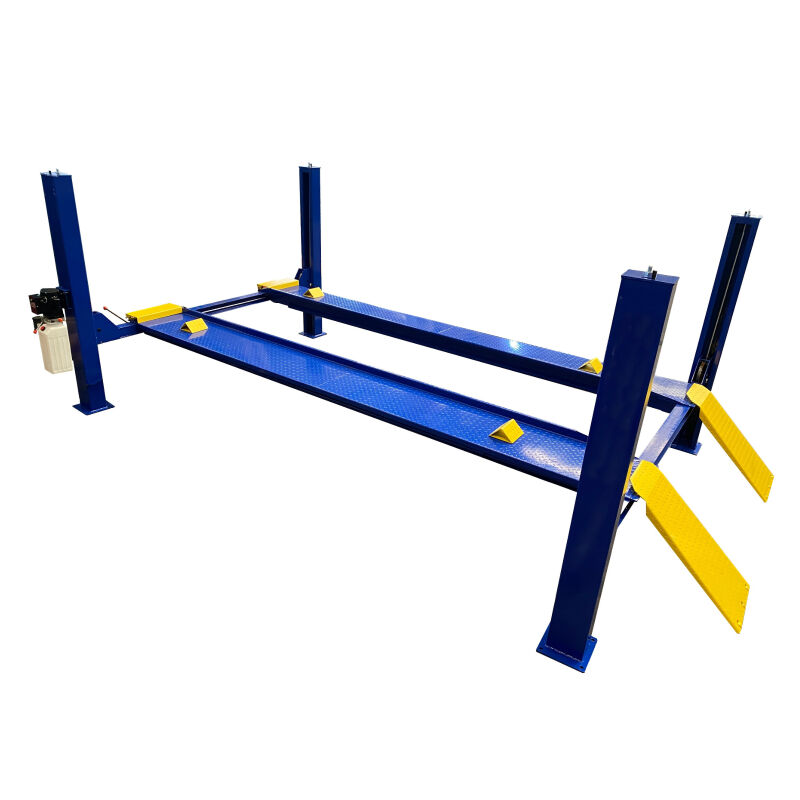
A 4-post configuration, sometimes referenced in the industry as a 5 Post Car Lift due to the structural variants that include a central support column, offers a fundamentally different approach compared to two-post lifts. Rather than relying on frame contact points alone, this design distributes vehicle weight across four sturdy runways, giving technicians a safer, more stable working environment. From collision repair shops to private collectors storing rare automobiles, the benefits are consistent, practical, and measurable. This article explores five core advantages that make the 4-post lift an ideal solution for long-term repairs and storage applications.
Structural Stability That Supports Long-Duration Work
A Foundation Built for Extended Use
One of the most significant advantages of the 5 Post Car Lift over alternatives is its inherent structural stability. The four-post design creates a rigid rectangular or square footprint, meaning the vehicle sits on wide runways rather than being balanced at pinch points. This makes the platform exceptionally steady during extended repairs that require a technician to spend hours beneath the vehicle without repositioning or re-securing the lift.
Long-term repairs — such as full drivetrain rebuilds, suspension overhauls, or rust remediation projects — demand a lift that holds position without vibration, wobble, or settling. The 5 Post Car Lift architecture addresses this requirement directly. Because weight is spread across the full length of the runways, there is no single point of stress concentration, which in turn reduces fatigue on the mechanical components over time.
For commercial shops taking on insurance work or restoration projects that span multiple days or weeks, this stability translates to practical efficiency. Technicians can leave the vehicle elevated overnight or across multiple shifts without concern, which reduces downtime associated with repeatedly lowering, repositioning, and re-raising the vehicle.
Consistency Across a Wide Range of Vehicle Types
Another dimension of structural advantage is how the 5 Post Car Lift handles diverse vehicle profiles. From low-slung sports cars to heavy SUVs and light commercial vehicles, the runway-based system accommodates different wheelbases and vehicle weights without requiring specialized adapters for every job. The wide runway spacing can typically be adjusted to suit different track widths, making the lift genuinely versatile in a multi-vehicle environment.
This flexibility matters greatly in shops that service a variety of makes and models. A technician does not need to mentally calculate clearance or worry about whether a particular vehicle's frame geometry is compatible. The 5 Post Car Lift simply accepts the vehicle on its tires, elevates it, and holds it — a process that is intuitive and repeatable regardless of the vehicle being serviced.
Superior Suitability for Long-Term Vehicle Storage
Maximizing Vertical Space in Any Garage
Perhaps the most commercially compelling advantage of the 5 Post Car Lift in the context of storage is its ability to double the effective capacity of any garage bay. By storing one vehicle on the elevated platform and parking another beneath it, workshop owners can accommodate twice the number of vehicles without expanding their physical footprint. For collectors, dealerships with overflow inventory, or specialty shops managing customer vehicles across restoration timelines, this is a transformative capability.
The 5 Post Car Lift designed for storage use typically features a parking stop configuration that allows the lift to settle at a precise height, ensuring the upper vehicle is secure and the lower space is fully usable. Some configurations include locking safety mechanisms that engage automatically once the desired height is reached, so stored vehicles are held reliably without requiring continuous hydraulic pressure.
This is a critical distinction from two-post lifts, which are not suitable for storage applications because they do not provide a stable resting surface under the vehicle's tires. The runway design of the 5 Post Car Lift means the stored vehicle remains on its wheels, preserving tire integrity and vehicle suspension geometry over long storage periods — an important consideration for high-value or classic vehicles.
Protection and Preservation During Extended Downtime
Beyond space efficiency, the 5 Post Car Lift also contributes to vehicle preservation. When a vehicle is elevated on its runways, airflow circulates freely around the undercarriage, reducing moisture accumulation that can contribute to rust and corrosion over long storage periods. This is a meaningful advantage for owners storing seasonal vehicles such as convertibles, motorcycles, or collector cars that may sit idle for months at a time.
Additionally, elevating a vehicle removes ground-level moisture exposure, which is especially relevant in older garages or shops without climate control. The 5 Post Car Lift effectively lifts stored vehicles out of the zone where temperature fluctuations and condensation are most aggressive. Over a storage season, this can make a measurable difference in the condition of exhaust systems, brake lines, and underbody panels.
Enhanced Safety Profile Compared to Alternative Lift Types
Load Distribution and Mechanical Redundancy
Safety is a non-negotiable requirement in any professional lift environment, and the 4 Post Car Lift delivers a strong safety profile through its design architecture. The four-post system inherently distributes load across multiple structural columns and hydraulic cylinders, which means that even under maximum rated capacity, no single mechanical component is operating at its stress limit. This redundancy is fundamental to long-term safety and equipment longevity.
Most 5 Post Car Lift models incorporate mechanical safety locks — also called safety ladders or safety pawls — that engage at incremental height positions. These passive locks ensure the lift cannot descend unintentionally in the event of hydraulic pressure loss, a power interruption, or system failure. This feature is particularly valuable in the long-duration work context where a vehicle may be elevated for an extended period and where intermittent events such as power outages must not create risk.
The broad platform also reduces the risk of tool drops causing vehicle damage, since the runway surface provides substantial clearance from the vehicle's undercarriage. Technicians working beneath a vehicle elevated on a 5 Post Car Lift have consistent, predictable working height and can move freely without the postural constraints sometimes associated with low-clearance two-post configurations.
Operator Confidence and Workflow Consistency
Operator confidence directly impacts productivity. When technicians trust their equipment completely, they work with greater focus and fewer interruptions caused by second-guessing the lift's stability or safety status. The 5 Post Car Lift builds that confidence through visual cues — the vehicle is visibly resting on solid runways — as well as through audible lock engagement that confirms the safety system is active.
For new technicians or apprentices still developing their skills, the 5 Post Car Lift presents a lower learning curve compared to frame-contact lifts. Drive-on operation is straightforward, and the stable working environment allows new operators to develop good practices without anxiety about vehicle positioning errors. This makes the lift an excellent choice for training environments as well as high-throughput professional shops.
Practical Workflow Advantages for Repair Operations
Drive-On Convenience and Time Efficiency
The operational workflow of the 5 Post Car Lift is one of its most underappreciated advantages. Unlike two-post lifts that require precise vehicle positioning to locate frame contact points, a four-post drive-on system simply requires the vehicle to be driven onto the runways within the track width adjustment range. This reduces setup time per vehicle, which across a busy working day adds up to meaningful efficiency gains.
For shops managing high vehicle throughput — oil change services, pre-purchase inspections, or routine maintenance schedules — the 5 Post Car Lift allows faster turnaround because operators spend less time positioning and checking contact points before raising. This benefit compounds when multiple technicians are using the shop simultaneously and minimizing the time each lift is occupied directly improves overall capacity utilization.
The 5 Post Car Lift also allows rolling jack access to the suspension and drivetrain components from beneath, which is essential for jobs involving wheel removal, brake servicing, or differential work. The open design between the runways ensures that a floor jack, transmission jack, or other service equipment can be introduced beneath the elevated vehicle without obstruction.
Adaptability to Accessory Equipment
Modern 5 Post Car Lift platforms are typically designed to accept accessory attachments that enhance their functional range. Alignment turn plates, rolling jack bridges, drip trays, and locking wheel chocks are among the commonly available additions that transform the basic lift into a comprehensive service station. For shops performing wheel alignment, chassis tuning, or full suspension rebuilds, these accessories turn the 5 Post Car Lift into a centralized service hub.
This expandability is a key reason the 5 Post Car Lift represents strong long-term value. Rather than requiring a separate dedicated alignment rack or storage system, a single 5 Post Car Lift platform can be configured progressively as the workshop's service offerings grow. This modular approach to workshop design helps operators manage capital expenditure more strategically over time.
Long-Term Investment Value and Durability
Build Quality and Operational Longevity
The 5 Post Car Lift is designed as a long-term capital asset. Quality units are constructed from heavy-gauge steel with surface treatments — typically powder coating or industrial paint systems — that resist corrosion in demanding workshop environments. The hydraulic systems used in these lifts are engineered for high cycle counts, meaning they are built to perform reliably through thousands of raise-and-lower operations over a service life that commonly spans a decade or more with proper maintenance.
For the workshop owner evaluating total cost of ownership, the durability of the 5 Post Car Lift is a compelling factor. Maintenance requirements are generally straightforward — hydraulic fluid changes, cable or chain inspections, safety lock lubrication, and runway surface cleaning — and do not demand specialized technical expertise. This keeps ongoing maintenance costs manageable and avoids unplanned downtime due to complex failures.
The durability advantage also extends to the vehicle being serviced or stored. Because the 5 Post Car Lift holds vehicles on their tires without frame contact, there is no risk of damage to rocker panels, frame rails, or pinch welds during normal operation. For shops servicing high-value vehicles or handling customer claims, this protection against incidental damage is a meaningful risk management benefit.
Return on Investment Across Multiple Use Cases
Unlike specialized equipment that serves only one function, the 5 Post Car Lift generates return on investment across several different revenue streams. It serves as a repair lift for standard service operations, a storage solution for maximizing bay capacity, a platform for alignment and suspension work with the right accessories, and an operational efficiency tool that reduces per-vehicle setup time. This multi-functional return profile makes the 5 Post Car Lift one of the highest-value equipment decisions a workshop can make.
Private collectors and home garage enthusiasts also benefit from this value profile. A well-chosen 5 Post Car Lift installed in a residential garage can store a seasonal vehicle overhead while keeping the primary daily driver accessible below, effectively creating a two-car garage from a single-bay space. Combined with the workshop functionality for home maintenance tasks, the investment justifies itself across both practical and lifestyle dimensions.
FAQ
Is a 5 Post Car Lift suitable for storing classic or high-value vehicles long-term?
Yes, the 5 Post Car Lift is well-suited for long-term storage of classic and high-value vehicles. Because the vehicle rests on its own tires on the runways, there is no contact with the frame or body panels, which eliminates the risk of contact-related damage. The elevated position also promotes airflow around the undercarriage, helping to reduce moisture accumulation and corrosion risk during extended storage periods.
How does a 4-post lift differ from a 2-post lift in terms of repair applications?
A 4-post lift, including the 5 Post Car Lift variant, supports the vehicle on its tires via wide runways, making it ideal for repairs that require a stable, long-duration elevated position. A 2-post lift contacts the vehicle at specific frame points and is better suited for quick-access undercarriage work such as exhaust or brake jobs. For extended repairs involving full suspension rebuilds, drivetrain work, or bodywork, the 4-post platform provides a more stable and versatile working environment.
What weight capacities are typical for a 5 Post Car Lift used in professional garages?
Most professional-grade 5 Post Car Lift models are rated between 8,000 and 14,000 pounds, with some heavy-duty variants supporting even greater loads for light commercial vehicles or trucks. The specific rated capacity depends on the model, construction grade, and hydraulic system specification. Always verify that the lift's rated capacity exceeds the heaviest vehicle you intend to service or store on a regular basis to ensure safe operation throughout the equipment's service life.
Can a 5 Post Car Lift be used for wheel alignment work?
With the appropriate accessory attachments, the 5 Post Car Lift can serve as an effective alignment platform. Alignment turn plates are designed to fit into recessed positions on the runways, allowing the front wheels to rotate freely during alignment procedures. This accessory compatibility makes the 5 Post Car Lift a versatile choice for shops that want to consolidate their equipment investment while still offering a full range of alignment and suspension services.
Table of Contents
- Structural Stability That Supports Long-Duration Work
- Superior Suitability for Long-Term Vehicle Storage
- Enhanced Safety Profile Compared to Alternative Lift Types
- Practical Workflow Advantages for Repair Operations
- Long-Term Investment Value and Durability
-
FAQ
- Is a 5 Post Car Lift suitable for storing classic or high-value vehicles long-term?
- How does a 4-post lift differ from a 2-post lift in terms of repair applications?
- What weight capacities are typical for a 5 Post Car Lift used in professional garages?
- Can a 5 Post Car Lift be used for wheel alignment work?