 EN
EN


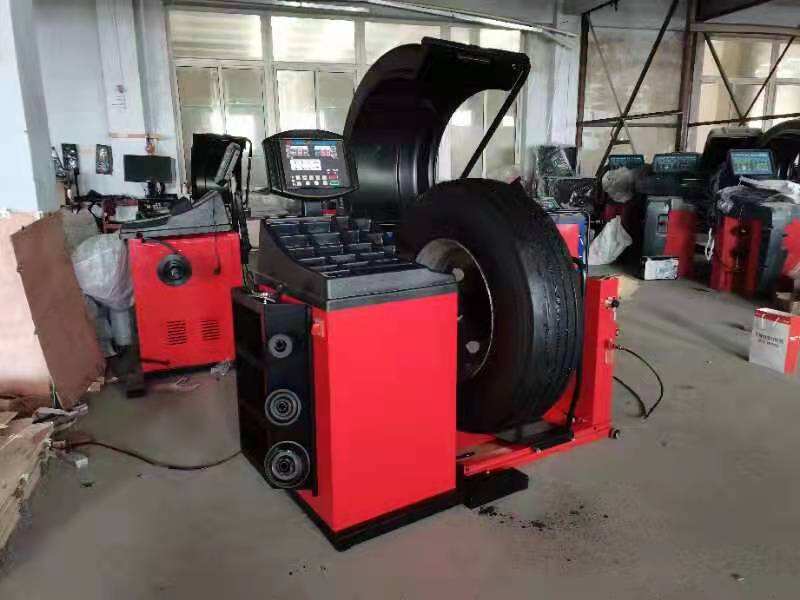
Selecting the appropriate wheel balancer size is a critical decision that directly impacts your shop's operational efficiency, service quality, and long-term profitability. The wrong wheel balancer can lead to inadequate service capabilities, wasted floor space, or unnecessary capital expenditure, while the right choice ensures optimal performance across your entire range of wheel and tire combinations. Understanding the relationship between wheel balancer specifications and your specific operational requirements forms the foundation for making an informed purchasing decision.
The process of choosing the right wheel balancer size involves analyzing multiple technical specifications, workspace constraints, and service portfolio requirements that work together to determine optimal equipment selection. Modern automotive service facilities must accommodate an increasingly diverse range of vehicle types, from compact passenger cars to heavy-duty commercial vehicles, each requiring different wheel balancer capabilities and sizing considerations. This comprehensive evaluation ensures that your investment delivers maximum return while providing the flexibility to handle current and future customer demands.
Understanding Wheel Balancer Size Specifications
Rim Diameter Capacity Range
The rim diameter capacity represents the most fundamental sizing specification for any wheel balancer, defining the minimum and maximum wheel sizes the equipment can accommodate. Standard wheel balancers typically handle rim diameters ranging from 10 inches to 24 inches, though specialized units may extend this range to accommodate larger commercial or custom applications. Understanding your current and anticipated service mix helps determine whether a standard-range wheel balancer meets your needs or if extended capacity becomes necessary for competitive advantage.
When evaluating rim diameter capacity, consider not only the wheels you currently service but also emerging trends in wheel sizing within your market segment. Larger diameter wheels continue to gain popularity across multiple vehicle categories, making future-proofing an important consideration in equipment selection. The wheel balancer you choose should provide adequate overhead capacity to handle growth in average wheel sizes without requiring premature equipment replacement.
Professional-grade wheel balancers often feature adjustable mounting systems that accommodate the full specified diameter range while maintaining precision and stability across all sizes. This adaptability ensures consistent balancing accuracy whether working with compact car wheels or large truck rims, maintaining service quality standards regardless of wheel size variation.
Wheel Width and Offset Parameters
Wheel width capacity determines the range of wheel widths your wheel balancer can effectively process, typically measured in inches and ranging from 1.5 inches to 20 inches on professional equipment. This specification directly affects your ability to service different vehicle types, as passenger cars generally use narrower wheels while trucks and performance vehicles require wider configurations. Matching wheel width capacity to your service portfolio ensures optimal equipment utilization and prevents operational limitations.
Wheel offset parameters define how far the wheel can extend inward or outward from the balancer's mounting surface, affecting clearance and accessibility during the balancing process. Proper offset accommodation ensures that various wheel designs, including deep-dish configurations and specialized commercial wheels, can be mounted and balanced effectively without interference or compromise in accuracy.
Advanced wheel balancers incorporate motorized or pneumatic width adjustment systems that streamline the setup process for different wheel sizes while maintaining precise positioning throughout the balancing cycle. These automated adjustment features reduce setup time and operator fatigue while ensuring consistent mounting quality across diverse wheel configurations.
Analyzing Your Shop's Operational Requirements
Vehicle Mix and Service Portfolio Assessment
Conducting a thorough analysis of your current and projected vehicle service mix provides essential data for wheel balancer sizing decisions. Document the types of vehicles your shop services regularly, including passenger cars, light trucks, SUVs, commercial vehicles, and any specialty applications such as motorcycles or recreational vehicles. Each vehicle category presents different wheel size ranges and balancing requirements that influence equipment selection criteria.
Seasonal variations in service demand may also affect wheel balancer requirements, particularly in regions where winter tire changeovers create temporary spikes in specific wheel sizes. Understanding these cyclical patterns helps ensure your chosen wheel balancer can handle peak demand periods without creating bottlenecks or requiring additional equipment investment during busy seasons.
Future business expansion plans should factor into your wheel balancer sizing decision, particularly if you anticipate adding new service lines or targeting different customer segments. A wheel balancer with expandable capabilities or modular design elements may provide better long-term value than equipment sized precisely to current requirements.
Workspace Configuration and Layout Optimization
Physical workspace constraints significantly influence wheel balancer size selection, as equipment dimensions must fit within available floor space while allowing adequate clearance for safe operation and maintenance access. Measure your designated wheel balancer area carefully, considering not only the equipment footprint but also operator working space, wheel storage areas, and traffic flow patterns around the installation site.
Ceiling height limitations may restrict your choice of wheel balancer models, particularly if you plan to service large commercial wheels that require additional vertical clearance during mounting and operation. Verify that your facility can accommodate the full operating envelope of your chosen wheel balancer, including any overhead components or extended wheel positions.
Integration with existing shop equipment and workflow patterns affects wheel balancer placement and sizing considerations. Position your wheel balancer to minimize material handling distances and create efficient workflow between tire changing, wheel balancing, and vehicle service areas. Proper integration reduces cycle time and improves overall shop productivity.
Technical Performance and Accuracy Considerations
Balancing Precision and Speed Requirements
Balancing precision requirements vary depending on your customer base and service standards, with high-performance and luxury vehicle owners typically demanding superior accuracy levels. Modern wheel balancers offer precision ratings measured in grams or fractions of ounces, with professional-grade equipment typically achieving accuracy within 1-2 grams across the specified size range. Evaluate whether your service standards require premium precision levels or if standard accuracy meets customer expectations.
Cycle time performance affects shop throughput and profitability, making speed considerations important in wheel balancer selection. Larger wheel balancers may require longer cycle times due to increased mass and complexity, while smaller units typically complete balancing cycles more quickly. Balance these competing factors based on your volume requirements and customer service expectations.
Advanced wheel balancers incorporate sophisticated measurement systems and automated features that maintain high precision while minimizing cycle time across different wheel sizes. These technological improvements help optimize productivity without compromising quality standards, particularly important in high-volume service environments.
Adaptability and Mounting System Flexibility
Mounting system flexibility determines how effectively your wheel balancer accommodates different wheel designs and mounting requirements. Professional wheel balancers typically feature multiple mounting options, including cone mounting for standard applications and flange mounting for custom or specialty wheels. This versatility ensures optimal mounting security and accuracy across diverse wheel configurations.
Quick-release mechanisms and tool-free adjustments reduce setup time when transitioning between different wheel sizes, improving operational efficiency in busy shop environments. Evaluate the ease and speed of size adjustments when comparing wheel balancer options, as frequent size changes can significantly impact productivity if the adjustment process becomes time-consuming.
Specialty mounting accessories expand wheel balancer capabilities to handle unique applications such as motorcycle wheels, ATV rims, or custom fabricated wheels. Consider whether your service portfolio includes or may include these specialty applications when evaluating wheel balancer size and accessory requirements.
Economic and Long-term Value Analysis
Initial Investment and Operating Cost Evaluation
Wheel balancer size directly correlates with initial purchase price, as larger capacity equipment typically commands premium pricing due to increased complexity and materials requirements. Evaluate the incremental cost of enhanced size capabilities against the potential revenue opportunities and competitive advantages these features provide. Consider whether the additional investment generates sufficient return through expanded service capabilities or improved operational efficiency.
Operating costs include ongoing maintenance, calibration, and consumable supplies that may vary based on wheel balancer size and complexity. Larger wheel balancers may require more expensive maintenance components and longer service intervals, while smaller units typically offer lower ongoing costs but may have capacity limitations that affect revenue potential.
Energy consumption varies among wheel balancer sizes and designs, with larger motors and more complex systems typically requiring higher power input. Factor these operating costs into your long-term economic analysis, particularly in facilities where energy costs represent a significant expense category.
Future-proofing and Scalability Planning
Market trends toward larger wheel sizes and more diverse vehicle types suggest that wheel balancer sizing decisions should incorporate forward-looking capacity planning. Choose equipment that provides reasonable overhead capacity beyond current requirements to accommodate market evolution without requiring premature replacement. This approach maximizes equipment lifespan and return on investment.
Modular design features allow some wheel balancers to be upgraded or reconfigured as requirements change, providing flexibility for shops that anticipate significant growth or service expansion. Evaluate upgrade pathways and expansion options when comparing wheel balancer alternatives, as this flexibility may justify higher initial investment costs.
Resale value considerations become important if you anticipate equipment changes within the typical depreciation period. Wheel balancers with broader size capabilities and modern features typically maintain better resale values than specialized or limited-capacity units, providing additional financial benefit over the equipment lifecycle.
FAQ
What wheel size range should I prioritize when selecting a wheel balancer?
Focus on the 14-20 inch diameter range as this covers the majority of passenger vehicles and light trucks currently in service. However, if your shop services luxury vehicles, sports cars, or commercial trucks, consider equipment that extends to 24-26 inches to capture these higher-margin opportunities. Analyze your current service mix and identify the wheel sizes that represent 80-90% of your volume to ensure optimal equipment utilization.
How does wheel balancer size affect balancing accuracy and quality?
Larger wheel balancers typically offer enhanced stability and precision due to more robust construction and advanced measurement systems. However, the relationship between size and accuracy depends more on equipment quality and calibration than physical dimensions alone. Professional-grade wheel balancers maintain consistent accuracy across their specified size range, while entry-level equipment may show precision variations at the extremes of their capacity range.
Can I upgrade a smaller wheel balancer to handle larger wheels later?
Most wheel balancers have fixed capacity limitations determined by their fundamental design and cannot be meaningfully upgraded to accommodate significantly larger wheels. While some accessories and mounting adapters may extend capabilities slightly, major capacity increases typically require complete equipment replacement. Choose initial sizing based on your anticipated long-term requirements rather than planning for significant upgrades.
What space requirements should I plan for different wheel balancer sizes?
Standard wheel balancers require approximately 6-8 feet of width and 4-6 feet of depth, plus additional clearance for operator access and wheel handling. Larger capacity units may need 8-10 feet of width and proportionally more clearance space. Plan for at least 3 feet of clearance on all sides for safe operation and maintenance access, with additional overhead clearance of 8-10 feet to accommodate large wheel diameters during mounting and operation.