 EN
EN

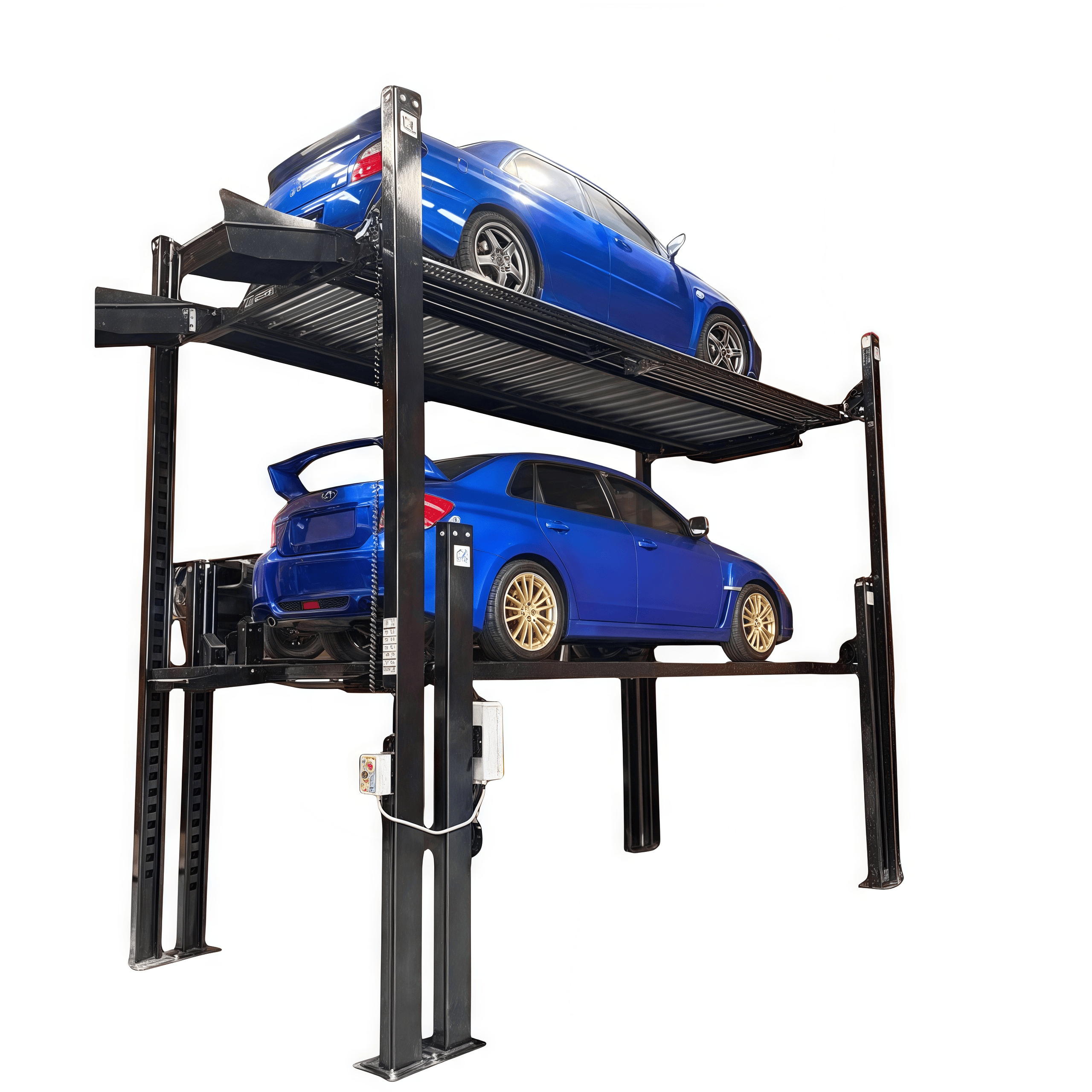
Choosing the right automotive lift for your repair shop is one of the most critical equipment decisions you'll make as a shop owner or manager. The debate between a 4 post car lift and a 2-post lift goes beyond simple preference—it fundamentally impacts your shop's workflow efficiency, service capabilities, and return on investment. While both lifting systems serve the essential purpose of elevating vehicles for undercarriage access and maintenance, they offer distinctly different operational advantages that align with specific repair shop needs and business models. Understanding these differences is essential before committing to a purchase that will serve your facility for years to come.
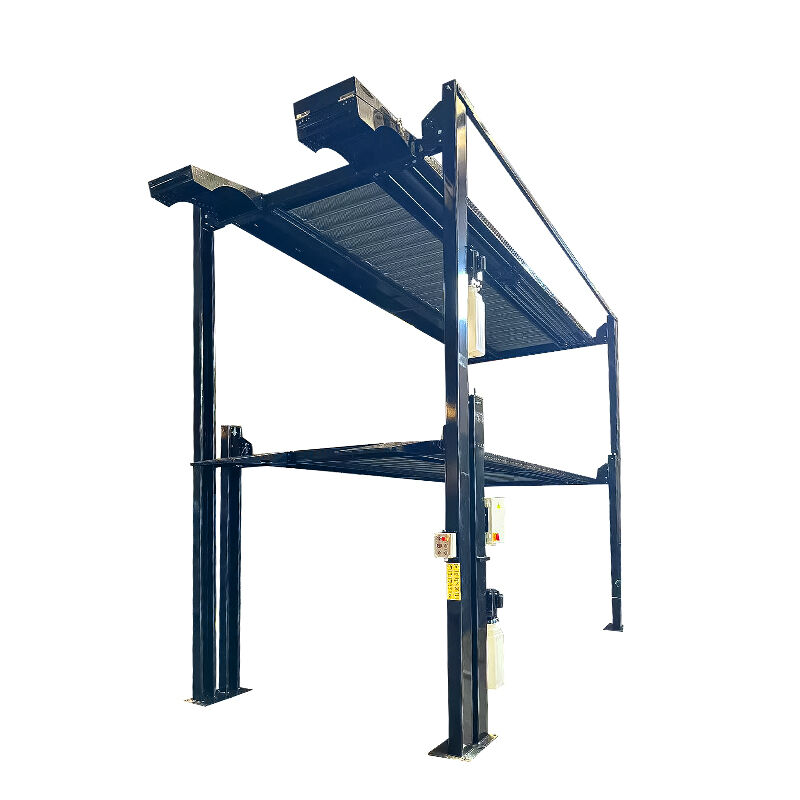
This comprehensive guide walks you through the key decision factors when comparing a 4 post car lift against a 2-post lift configuration. We'll examine how each lift type performs across critical dimensions including floor space requirements, vehicle access patterns, maintenance demands, safety considerations, and total cost of ownership. By analyzing your shop's specific service mix, physical layout constraints, and growth trajectory, you'll gain the clarity needed to select the lift system that maximizes both operational efficiency and profitability for your unique repair environment.
Understanding the Fundamental Design Differences
Structural Configuration and Load Distribution
The most obvious distinction between these lift types lies in their physical structure and how they support vehicle weight. A 4 post car lift features four vertical columns connected by runways that support the vehicle's wheels, creating a drive-on platform system. This design distributes the vehicle's weight across four load-bearing points positioned at the corners, with the runways themselves providing the lifting surface. The vehicle remains on its wheels throughout the lifting process, resting on adjustable approach ramps that accommodate different wheelbases and vehicle lengths.
In contrast, a 2-post lift utilizes two columns positioned on either side of the vehicle, with swing arms that extend beneath the chassis to engage lift points on the vehicle's frame or pinch welds. This configuration suspends the vehicle in the air with its wheels hanging free, providing completely unobstructed access to the entire undercarriage, suspension components, and wheel assemblies. The load is concentrated at specific reinforced contact points on the vehicle structure rather than distributed through the tire contact patches as with a 4 post car lift system.
Access Patterns and Workflow Implications
These structural differences create fundamentally different access patterns that directly impact repair workflow. With a 4 post car lift, technicians work around the vehicle's perimeter, accessing the undercarriage between the runways while the wheels remain in contact with the platform. This configuration excels for services that don't require wheel removal, such as oil changes, exhaust system work, transmission servicing, and general inspection tasks. The stable platform created by the four-post design also makes it ideal for vehicle storage applications where long-term stability is paramount.
The 2-post lift provides superior access for suspension work, brake service, tire changes, and any repair requiring wheel removal or rotation. The free-hanging wheels allow technicians to work directly on steering components, control arms, and wheel bearings without obstruction. This access advantage makes 2-post lifts the preferred choice for shops performing high volumes of brake work, tire services, and front-end alignments. However, this same design characteristic means the vehicle must be precisely positioned and carefully balanced during the lifting process to ensure stability.
Installation Requirements and Facility Considerations
Installation demands differ significantly between these lift types, with direct implications for facility planning and infrastructure costs. A 4 post car lift typically requires less aggressive floor preparation because the weight distribution across four anchor points and the broader footprint creates lower point loads on the concrete slab. Many four-post models can be installed on standard 4-inch concrete with proper anchoring, though thicker slabs are always preferable for long-term stability and safety. The self-contained design also means that some portable or low-rise versions may not require permanent floor anchoring at all.
Two-post lifts demand more robust floor preparation due to concentrated load points and the dynamic forces created by asymmetric vehicle positioning. Most manufacturers specify minimum 6-inch reinforced concrete with specific PSI ratings, and the anchor bolts must be installed with precision to ensure column alignment and lifting stability. Additionally, 2-post installations must carefully consider overhead clearance for the lifting arms and sufficient drive-through width between the columns. These stricter installation requirements can add several thousand dollars to the total project cost compared to a 4 post car lift installation in the same facility.
Evaluating Performance Based on Your Service Mix
Matching Lift Type to Primary Service Operations
The right lift choice depends heavily on your shop's primary revenue sources and most frequent repair operations. If your business model centers on quick-service operations like oil changes, inspections, fluid services, and exhaust work, a 4 post car lift offers distinct advantages. The drive-on design allows faster vehicle loading and positioning, reducing the time technicians spend aligning lift arms and checking engagement points. This efficiency gain compounds across dozens of daily services, potentially increasing throughput by 15-20% compared to more time-intensive 2-post positioning procedures.
For shops specializing in comprehensive diagnostics, suspension repairs, brake system overhauls, or performance modifications requiring frequent wheel removal, the 2-post lift becomes the more productive choice. The unobstructed wheel access eliminates the need for auxiliary jacks or supplementary equipment to raise wheels off the runways of a 4 post car lift. This direct access streamlines workflow for tire rotations, brake pad replacements, shock absorber installations, and alignment preparation. Shops performing 30 or more brake jobs weekly will typically recoup any additional 2-post installation costs through improved technician productivity within the first year of operation.
Vehicle Compatibility and Capacity Considerations
Different lift configurations handle vehicle variety with varying degrees of flexibility. A 4 post car lift accommodates an extremely wide range of vehicle types with minimal adjustment because the runways support any vehicle that can drive onto the platform. From compact cars to full-size trucks and even some light commercial vehicles, the four-post design requires only wheelbase adjustment rather than precise lift-point location. This versatility proves especially valuable for general repair shops serving diverse customer bases with unpredictable vehicle mix.
Two-post lifts require more operator skill and knowledge to safely accommodate different vehicle types, as lift arm positioning must engage manufacturer-specified lift points that vary significantly across makes and models. Low-ground-clearance sports cars, unibody crossovers, and body-on-frame trucks all demand different approach strategies and arm configurations. However, quality 2-post lifts with asymmetric arm capability can actually provide superior access to vehicles with rearward weight bias by allowing optimal positioning of the center of gravity between the columns. This flexibility becomes crucial when servicing modern SUVs and electric vehicles with heavy battery packs positioned toward the rear axle.
Storage and Multi-Purpose Functionality
Beyond active repair operations, many shops utilize lifts for vehicle storage to maximize floor space utilization. A 4 post car lift excels in storage applications because the stable platform design allows vehicles to remain elevated for extended periods without safety concerns about arm engagement or balance shifts. Shops can effectively double their storage capacity by parking one vehicle beneath an elevated vehicle on a four-post lift, creating valuable space for inventory vehicles, customer cars awaiting parts, or long-term project vehicles. Some specialty four-post models include rolling jacks integrated into the runway design, providing wheel-free access when needed while maintaining storage capability.
While 2-post lifts can technically be used for vehicle storage, this practice is generally discouraged for extended periods due to potential stress on lift point engagement and the lack of secondary support systems. The suspended configuration also limits the ability to safely work beneath a stored vehicle if another vehicle occupies the floor space below. For shops requiring both active repair capability and flexible storage options, the 4 post car lift delivers better multi-purpose functionality, whereas facilities focused purely on high-volume service operations benefit more from the specialized access advantages of 2-post designs.
Analyzing Space Requirements and Shop Layout Impact
Physical Footprint and Floor Space Utilization
Floor space is precious real estate in any repair facility, making the spatial footprint of your lift choice a critical economic consideration. A 4 post car lift occupies a larger overall footprint than a comparable-capacity 2-post lift, with typical four-post models requiring approximately 180-200 square feet of floor space when accounting for the runway length and necessary approach clearance. The wider stance created by the four corner columns also consumes more lateral space, potentially limiting the number of lift bays that can fit within a given building width.
Two-post lifts concentrate their footprint along two vertical lines, typically consuming only 120-150 square feet including clearance zones. This narrower profile allows shops to position lifts closer together when creating multiple service bays, potentially fitting three 2-post bays in the same linear space that accommodates only two 4 post car lift installations. For urban shops operating in space-constrained facilities with high rent per square foot, this difference in spatial efficiency can represent significant ongoing cost savings and revenue opportunity through increased service capacity.
Drive-Through Access and Traffic Flow Patterns
Shop layout efficiency extends beyond static footprint to include vehicle movement patterns and technician workflow around lifted vehicles. A 4 post car lift creates a defined traffic channel with the vehicle elevated on runways, but the four-column design restricts lateral movement and creates potential congestion points when multiple technicians need simultaneous access to the undercarriage. The runways themselves can also become obstacles for equipment movement, tool cart positioning, and parts delivery unless the shop layout specifically accounts for these circulation patterns.
The open center design of 2-post lifts facilitates superior traffic flow, allowing technicians, equipment, and rolling tool chests to move freely around the entire vehicle perimeter and directly beneath the elevated car. This 360-degree access pattern reduces technician movement time and supports more efficient parts staging and tool positioning. For shops performing complex multi-system repairs where several technicians may work simultaneously on different vehicle systems, the 2-post configuration minimizes workflow interference and reduces the time vehicles spend occupying lift positions.
Ceiling Height and Vertical Clearance Factors
Vertical space constraints can eliminate certain lift options entirely, making ceiling height assessment crucial before selecting between lift types. A 4 post car lift typically requires less overhead clearance because vehicles are raised to working height without needing additional space for lifting arms to swing clear of the vehicle roof. Most four-post installations function effectively in facilities with 11-12 foot ceilings, making them suitable for converted buildings or facilities with standard commercial ceiling heights. The lower vertical profile also simplifies installation in buildings with complex overhead utilities, ductwork, or structural beams.
Two-post lifts demand greater ceiling height to accommodate the full upward travel of the carriage and lifting arms, particularly when servicing tall vehicles like full-size vans or trucks. Minimum ceiling heights of 12-14 feet are standard requirements, with 16 feet or more preferred for shops regularly servicing commercial vehicles. Insufficient overhead clearance not only limits lifting height but can also create safety hazards if technicians cannot achieve adequate working height beneath elevated vehicles. Shops operating in buildings with ceiling height limitations may find a 4 post car lift to be the only viable option regardless of other operational preferences.
Comparing Safety Features and Operational Risks
Stability Characteristics and Balance Requirements
Safety stands as the paramount concern in any lift selection decision, with each lift type presenting distinct stability characteristics and potential failure modes. A 4 post car lift offers inherent stability advantages through its broad base and four-point weight distribution, with the vehicle's center of gravity naturally positioned well within the support perimeter. The wheel-supported design also means that even in the unlikely event of hydraulic failure, the vehicle remains on a physical platform rather than suspended in air. This built-in redundancy provides an additional safety margin that makes four-post lifts particularly appropriate for shops with less experienced technicians or high-turnover workforces.
Two-post lifts require more precise vehicle positioning to maintain proper weight distribution between the two columns, with the center of gravity ideally aligned with the column centerline. Improper positioning can create dangerous side-loading conditions or forward-backward imbalance that stresses the lift mechanism and creates tip-over risk. However, modern 2-post lifts incorporate sophisticated safety features including automatic arm restraints, hydraulic flow restrictors, and mechanical locking systems that engage at multiple height positions. When operated correctly by trained personnel, quality 2-post lifts meet or exceed all industry safety standards, but the operator skill requirement remains higher than with a 4 post car lift installation.
Mechanical Locking Systems and Fail-Safe Design
The mechanical locking mechanisms that prevent unintended descent vary significantly between lift types, with important implications for long-term safety and maintenance requirements. A 4 post car lift typically employs either cable-based locking systems or hydraulic load-holding valves that engage automatically as the lift rises, with multiple locking positions available throughout the lifting range. The redundant cable design common in four-post lifts means that even if one cable fails, the remaining cables continue supporting the load until the issue is identified and repaired during routine maintenance.
Two-post lifts generally utilize either mechanical pawl systems that engage with ratchet tracks on the columns or hydraulic velocity fuses that prevent rapid descent if hydraulic pressure is lost. These systems provide robust protection when properly maintained, but they require more frequent inspection and adjustment compared to the simpler cable systems common in four-post designs. The concentrated load points of 2-post lifts also mean that locking system failure potentially results in more dramatic consequences, making adherence to manufacturer-specified inspection schedules absolutely critical for 2-post installations.
Operator Training and Human Error Factors
The human element represents the most significant variable in lift safety, with different lift types demanding different skill levels and presenting different opportunities for operator error. A 4 post car lift simplifies the lifting process by requiring only proper vehicle centering on the runways and verification that the lifting mechanism engages evenly across all four corners. The straightforward drive-on process reduces positioning errors and eliminates the need to locate and engage specific chassis lift points. This operational simplicity translates to shorter training periods for new technicians and reduced risk of positioning errors that could lead to vehicle damage or safety incidents.
Operating a 2-post lift safely requires knowledge of vehicle-specific lift points, understanding of weight distribution principles, and skill in positioning asymmetric or symmetric arms based on vehicle configuration. Technicians must also verify proper arm engagement before lifting and remain vigilant for any signs of imbalance during the lifting process. While this higher skill requirement isn't inherently problematic in shops with experienced, stable workforces, facilities experiencing frequent technician turnover or employing less experienced personnel may encounter more frequent positioning errors and increased vehicle damage risk with 2-post configurations compared to the more forgiving nature of a 4 post car lift system.
Assessing Total Cost of Ownership and Long-Term Value
Initial Purchase Price and Installation Costs
The financial comparison between lift types begins with initial acquisition costs, where significant differences exist across comparable capacity ranges. A 4 post car lift with 9,000-pound capacity typically costs between $2,500 and $4,500 for quality commercial-grade models, with premium versions featuring integrated jacks, extended runways, or specialized finishes commanding prices up to $7,000. Installation costs generally run lower for four-post units due to less demanding floor preparation requirements and simpler anchor bolt patterns, typically adding $500-$1,200 to the total project cost depending on facility conditions and local labor rates.
Comparable-capacity 2-post lifts generally carry higher price tags, with quality 9,000-10,000 pound models ranging from $3,500 to $6,000, and premium asymmetric designs reaching $8,000-$10,000. The more complex installation requirements typically add $1,000-$2,500 to the project cost, including floor coring, reinforcement assessment, and precision column alignment. When comparing equivalent-quality lifts from reputable manufacturers, the total installed cost difference typically ranges from $1,500 to $3,000, with 2-post installations being more expensive. This initial cost differential must be weighed against the operational efficiency gains that 2-post lifts deliver for certain service types.
Maintenance Requirements and Service Life Expectations
Long-term ownership costs extend well beyond initial purchase, with ongoing maintenance demands varying substantially between lift configurations. A 4 post car lift generally requires less frequent maintenance due to its simpler mechanical design and lower stress loading patterns. Routine maintenance typically consists of quarterly cable inspections, annual hydraulic fluid changes, and periodic lubrication of the lifting mechanism and safety locks. The distributed load pattern also results in less wear on individual components, with quality four-post lifts regularly delivering 15-20 years of service life when properly maintained and operated within capacity limits.
Two-post lifts demand more intensive maintenance protocols, including monthly safety lock verification, quarterly arm pivot lubrication, semi-annual hydraulic system inspections, and annual third-party safety certifications in many jurisdictions. The concentrated loads at lift arm engagement points create higher wear rates on bushings, bearings, and hydraulic components, potentially requiring component replacement every 5-7 years under high-volume use conditions. However, the premium 2-post lifts from quality manufacturers incorporate serviceable wear components designed for economical replacement, and the higher maintenance demands are offset by superior productivity in appropriate applications. Total maintenance costs over a 15-year service life typically run 30-40% higher for 2-post installations compared to equivalent-capacity four-post units.
Productivity Impact and Revenue Generation Potential
The ultimate measure of lift value lies not in cost metrics but in revenue-generating capacity and contribution to shop profitability. For facilities where a 4 post car lift aligns well with the service mix—particularly quick-service operations, inspections, and fluid services—the combination of lower acquisition cost, reduced maintenance demands, and adequate productivity creates strong return on investment. A four-post lift can generate $75,000-$125,000 in annual service revenue depending on utilization rates and local labor pricing, delivering payback periods of 6-12 months on the initial investment.
In shops where wheel-off access drives significant revenue—particularly facilities performing high volumes of brake work, suspension service, or tire operations—the 2-post lift's productivity advantages can justify its higher costs through increased daily service capacity. By eliminating the need for auxiliary jacks and reducing service time per vehicle by 15-25% on relevant job types, a properly utilized 2-post lift can generate an additional $15,000-$30,000 in annual revenue compared to a four-post alternative. For a shop performing 50+ brake jobs monthly, this productivity premium delivers investment payback within 12-18 months despite the higher initial and maintenance costs associated with 2-post installations.
FAQ
Can a 4 post car lift be used for brake and suspension work?
Yes, a 4 post car lift can be used for brake and suspension work, but with important limitations. While the basic lift provides access to the undercarriage, the wheels remain on the runways, which prevents direct access to brake components, wheel bearings, and suspension parts requiring wheel removal. To perform these services effectively, you'll need supplementary equipment such as rolling jacks that raise individual wheels off the runways or specialized four-post lifts with integrated jacking systems. These add-ons increase the total system cost and add time to each service compared to the direct wheel access provided by a 2-post lift. For shops performing occasional brake work, a four-post lift with jack accessories can suffice, but facilities with high brake and tire service volumes typically find 2-post lifts more efficient despite the higher initial investment.
How much weight can a standard 4 post car lift safely handle?
Standard commercial 4 post car lift models typically offer weight capacities ranging from 8,000 to 12,000 pounds, with 9,000-pound capacity being the most common configuration for general automotive repair shops. This capacity comfortably handles most passenger vehicles, light-duty trucks, and crossover SUVs, which typically weigh between 3,000 and 6,500 pounds. For shops regularly servicing three-quarter-ton and one-ton pickup trucks, heavy-duty vans, or older full-size SUVs, 12,000-pound or 14,000-pound capacity models provide necessary safety margin. It's crucial to remember that rated capacity represents the maximum safe load, and best practices recommend operating at no more than 80% of rated capacity to account for uneven weight distribution and provide safety margin. Always verify the actual weight of vehicles you service most frequently and select a lift capacity that exceeds your heaviest regular customers by at least 2,000 pounds.
Which lift type is better for a home garage or hobbyist use?
For home garage and hobbyist applications, a 4 post car lift typically represents the better choice for most users. The drive-on design eliminates the precise positioning and lift-point identification required with 2-post lifts, making it more user-friendly for occasional users without professional training. The stability of a four-post configuration also provides greater peace of mind when working alone, and the ability to use the lift for long-term vehicle storage adds significant value in home settings where space optimization matters. The less demanding installation requirements mean many homeowners can install a four-post lift on standard residential garage slabs, whereas 2-post lifts often require concrete reinforcement beyond typical home garage specifications. However, if your primary interest involves wheel and brake work, tire changes, or suspension modifications, and you have adequate ceiling height and floor preparation, a 2-post lift delivers superior access for these specific tasks. Many serious automotive enthusiasts ultimately install both types in larger shop spaces to maximize versatility.
Do I need special electrical requirements for a 4 post car lift?
Most 4 post car lift models designed for light-duty and standard automotive applications operate on standard 110-volt single-phase electrical service, which is readily available in virtually all commercial and residential settings. These lifts typically draw 15-20 amps during operation, making them compatible with standard circuit breakers and existing electrical infrastructure without requiring expensive service upgrades. This electrical simplicity represents another advantage of four-post designs compared to some heavy-duty 2-post lifts that may require 220-volt service for faster lifting speeds or higher capacity applications. However, some premium four-post models with rapid lifting capabilities or those rated for 14,000 pounds and above may specify 220-volt service for optimal performance. Always verify the electrical specifications of your specific model before purchase, and if 220-volt service is required, factor the cost of electrical work into your total project budget, as running new 220-volt circuits can add $500-$1,500 to installation costs depending on distance from your electrical panel and local code requirements.