 EN
EN

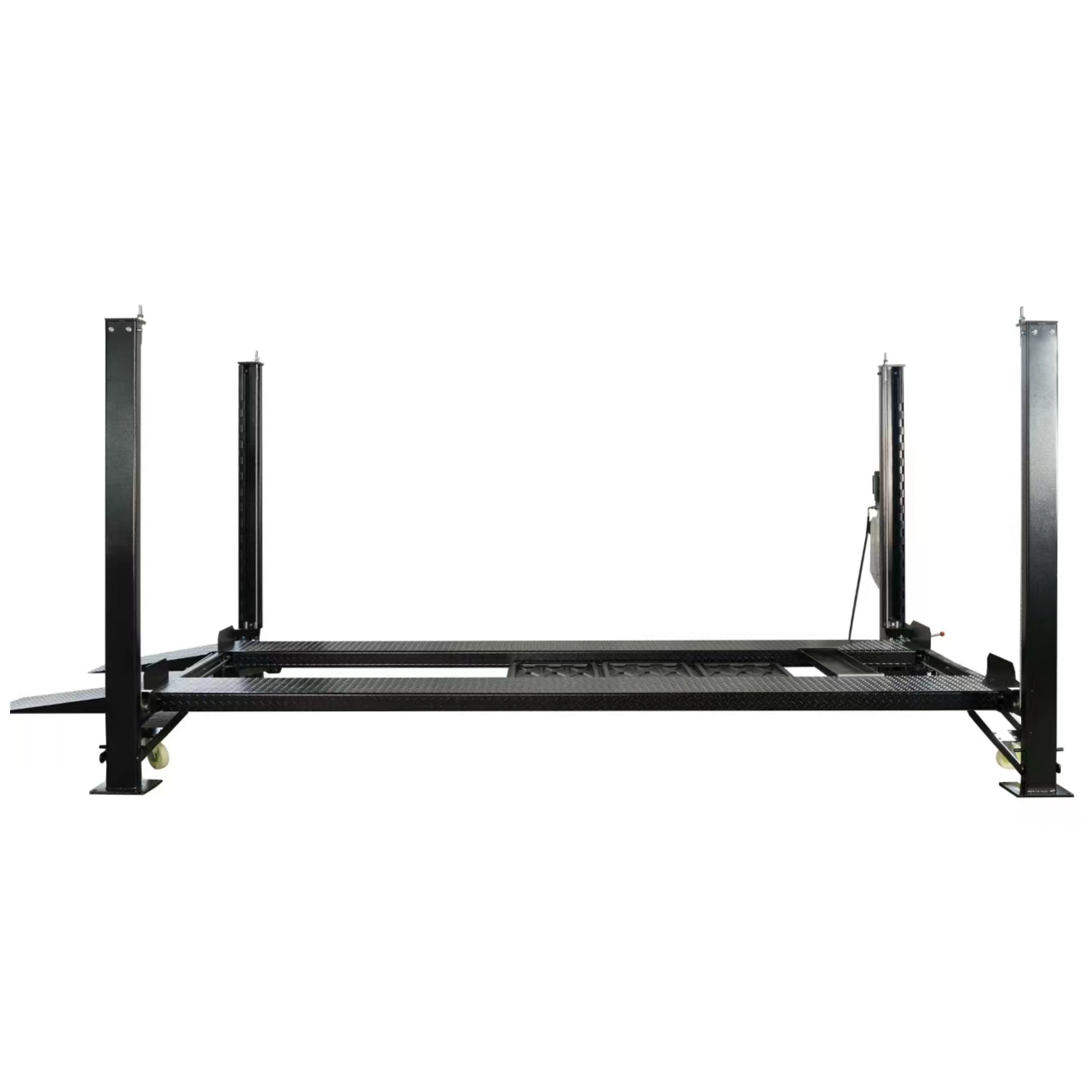
A 4 post car lift represents one of the most versatile and widely adopted lifting solutions in automotive service facilities, home garages, and commercial workshops worldwide. Unlike traditional hydraulic jacks or scissor lifts, this mechanical marvel provides unparalleled stability and safety through its four-pillar design, enabling technicians and automotive enthusiasts to work beneath vehicles with complete confidence. The engineering behind a 4 post car lift combines robust steel construction with precision hydraulic systems, creating a lifting platform capable of handling everything from compact sedans to heavy-duty trucks and SUVs.
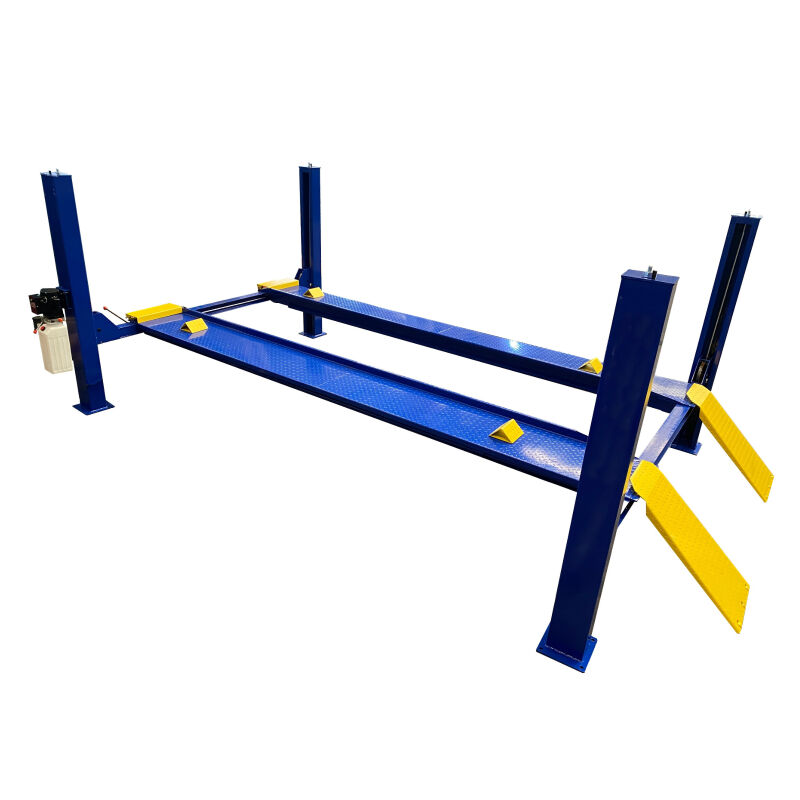
The fundamental advantage of a 4 post car lift lies in its exceptional weight distribution capabilities and the elimination of contact points that could potentially damage vehicle bodies. Traditional two-post lifts require precise positioning under specific lift points, whereas four-post systems utilize drive-on ramps that support the entire wheelbase. This design philosophy makes the 4 post car lift particularly valuable for storage applications, routine maintenance procedures, and extended repair operations where vehicle stability remains paramount throughout the entire service process.
Engineering Design and Construction Principles
Structural Framework Components
The backbone of every 4 post car lift consists of four vertical columns manufactured from high-grade structural steel, typically featuring wall thicknesses ranging from 5mm to 8mm depending on the lift's weight capacity. These columns are interconnected through reinforced crossbeams and diagonal bracing elements that distribute load forces evenly across the entire framework. The geometric configuration creates a rectangular lifting platform where each corner post bears approximately 25% of the total vehicle weight, ensuring balanced load distribution and minimizing stress concentrations that could compromise structural integrity over extended operational periods.
Advanced manufacturing techniques employed in 4 post car lift construction include precision welding processes, stress-relief annealing, and multi-stage surface preparation protocols. The steel components undergo rigorous quality control testing including dimensional verification, weld penetration analysis, and load testing procedures that exceed standard safety factors by significant margins. Many premium models incorporate galvanized or powder-coated finishes that provide superior corrosion resistance, ensuring decades of reliable service even in challenging environmental conditions.
Hydraulic System Integration
The hydraulic propulsion system represents the technological heart of modern 4 post car lift designs, featuring precision-engineered cylinders, high-pressure pumps, and sophisticated control valves. Most systems operate within pressure ranges of 2000 to 3000 PSI, utilizing premium hydraulic fluid that maintains consistent viscosity across wide temperature variations. The hydraulic cylinders are strategically positioned to ensure synchronized lifting motion, preventing platform tilt or uneven elevation that could destabilize vehicles during the lifting process.
Contemporary 4 post car lift hydraulic systems incorporate advanced safety features including pressure relief valves, flow control mechanisms, and emergency descent systems. These components work in concert to prevent hydraulic overpressure conditions while maintaining precise control over lifting and lowering speeds. The integration of hydraulic accumulators in premium models provides additional safety redundancy, ensuring controlled descent capabilities even in the event of primary system failures.
Operational Mechanisms and Control Systems
Drive-On Platform Configuration
The drive-on platform system distinguishes the 4 post car lift from alternative lifting technologies through its user-friendly operation and universal vehicle compatibility. The platform consists of two parallel runways constructed from steel plate or diamond-pattern tread plate, providing secure traction for vehicle tires while accommodating various wheelbases and track widths. Adjustable runway extensions allow operators to customize the platform configuration for specific vehicle dimensions, from compact cars with wheelbases under 100 inches to extended vehicles exceeding 140 inches in length.
Safety features integrated into the platform design include raised edges to prevent tire rolloff, strategically positioned wheel chocks, and non-slip surface treatments that maintain traction under various weather conditions. The platform height adjustment mechanisms enable precise positioning for optimal workflow ergonomics, reducing operator fatigue during extended maintenance procedures. Advanced models incorporate electronic sensors that detect vehicle positioning and automatically adjust platform settings to ensure balanced weight distribution across all four support points.
Control Interface and Safety Systems
Modern 4 post car lift installations feature sophisticated control interfaces that prioritize operator safety while maximizing operational efficiency. Push-button control stations typically include clearly labeled UP and DOWN functions, emergency stop capabilities, and visual indicators that display platform status and hydraulic system pressure. Many systems incorporate key-switch activation requirements that prevent unauthorized operation and ensure only trained personnel can access lifting functions.
Integrated safety systems include automatic locking mechanisms that engage at predetermined intervals during the lifting cycle, preventing platform descent due to hydraulic pressure loss or component failure. Mechanical safety locks provide redundant protection, utilizing spring-loaded pawls that engage with vertical rack systems mounted on each corner post. These redundant safety features ensure that vehicles remain securely elevated even during extended storage periods or when performing maintenance procedures that require sustained platform positioning.
Applications and Industry Uses
Commercial Automotive Service Centers
Commercial automotive service facilities represent the primary market segment for 4 post car lift installations, where these systems provide essential capabilities for routine maintenance, diagnostic procedures, and complex repair operations. The ability to elevate vehicles while maintaining full access to undercarriage components makes the 4 post car lift indispensable for oil changes, transmission services, exhaust system repairs, and brake maintenance procedures. Service centers particularly value the storage functionality that allows multiple vehicles to be elevated simultaneously, maximizing facility throughput and revenue potential.
The versatility of a 4 post car lift extends to specialized automotive services including wheel alignment procedures, suspension component replacement, and differential repair operations. The stable platform eliminates vehicle movement during precision alignment adjustments, ensuring accurate measurements and optimal tire wear characteristics. Additionally, the accessibility provided by the elevated position reduces technician fatigue and improves work quality by providing comfortable working positions for extended repair procedures.
Residential and Enthusiast Applications
Home garage installations of 4 post car lift systems have experienced significant growth among automotive enthusiasts and collectors who require professional-grade lifting capabilities in residential settings. The compact footprint and drive-on convenience make these systems ideal for garages with limited ceiling height or workspace constraints. Residential users particularly appreciate the storage capabilities that effectively double garage capacity by allowing one vehicle to be parked above another, maximizing valuable floor space.
Enthusiast applications include restoration projects, performance modifications, and routine maintenance procedures that benefit from improved accessibility and safety compared to floor jacks or ramps. The stability provided by a 4 post car lift enables detailed undercarriage work including suspension modifications, exhaust system upgrades, and chassis reinforcement procedures. Many residential installations incorporate additional accessories such as drip trays, rolling bridge jacks, and auxiliary lighting systems that enhance functionality and convenience.
Selection Criteria and Specifications
Weight Capacity Considerations
Selecting the appropriate weight capacity for a 4 post car lift requires careful analysis of current and future vehicle requirements, with safety factors that exceed maximum anticipated loads by substantial margins. Standard capacity ratings range from 7,000 pounds for light-duty applications to 25,000 pounds or more for heavy commercial vehicles. The weight capacity determination must consider not only the vehicle's curb weight but also additional loads from fluids, cargo, and any accessories or modifications that increase overall mass.
Professional installations typically specify 4 post car lift models with capacities exceeding maximum anticipated vehicle weights by 50% to 100%, providing safety margins that account for dynamic loading during vehicle positioning and potential overload conditions. This conservative approach ensures safe operation throughout the lift's service life while accommodating future vehicle acquisitions that may exceed current weight requirements. Heavy-duty models designed for commercial truck applications feature reinforced construction and upgraded hydraulic systems capable of handling extreme weight loads with sustained reliability.
Dimensional and Clearance Requirements
The physical dimensions of a 4 post car lift installation must accommodate both the equipment footprint and the operational clearances required for safe vehicle maneuvering. Standard runway lengths range from 168 inches to 204 inches, with width measurements typically between 102 inches and 110 inches depending on the model configuration. Ceiling height requirements vary based on the maximum lift height specification, with most installations requiring minimum clearances of 11 to 14 feet to accommodate the fully elevated platform and vehicle height.
Operational clearances around the 4 post car lift perimeter must provide adequate space for vehicle approach, door opening, and technician movement during service procedures. Industry standards recommend minimum clearances of 3 feet on all sides of the lift installation, with additional space considerations for overhead obstacles, electrical panels, and ventilation systems. The runway width adjustment capabilities of many models allow accommodation of various vehicle track widths while maintaining proper weight distribution across the platform surface.
Installation and Maintenance Requirements
Foundation and Electrical Specifications
Proper installation of a 4 post car lift begins with foundation preparation that meets or exceeds manufacturer specifications for concrete thickness, reinforcement, and curing requirements. Most installations require concrete pads with minimum thickness of 4 to 6 inches, reinforced with steel rebar in grid patterns that distribute anchor loads across the foundation area. The concrete must achieve specified compressive strength ratings before anchor installation, typically requiring 28-day curing periods for optimal performance characteristics.
Electrical requirements for 4 post car lift installations vary based on hydraulic pump specifications and control system complexity, with most models requiring 220V single-phase or three-phase power supplies. Proper electrical installation includes dedicated circuit breakers, grounding systems that meet national electrical codes, and emergency disconnect switches positioned for immediate access during operation. Professional installation ensures compliance with local building codes and safety regulations while optimizing system performance and reliability.
Preventive Maintenance Protocols
Regular maintenance of a 4 post car lift ensures safe operation and extends equipment service life through systematic inspection and service procedures. Daily maintenance tasks include visual inspection of hydraulic fluid levels, examination of safety lock mechanisms, and verification of control system functionality. Weekly maintenance protocols encompass lubrication of moving components, inspection of hydraulic hoses and fittings, and testing of emergency safety systems to ensure proper operation.
Comprehensive maintenance schedules include annual inspections by certified technicians who perform detailed examinations of structural components, hydraulic system integrity, and electrical connections. These professional inspections identify potential wear patterns, component fatigue, and performance degradation before they compromise safety or operational reliability. Preventive maintenance records provide documentation of system condition and compliance with safety regulations, essential for insurance requirements and regulatory compliance in commercial applications.
Safety Features and Regulatory Compliance
Mechanical Safety Systems
The mechanical safety features integrated into modern 4 post car lift designs provide multiple layers of protection against equipment failure and operational errors. Primary safety mechanisms include spring-loaded locking pawls that engage automatically with vertical rack systems during lifting operations, preventing platform descent even in the event of complete hydraulic pressure loss. These mechanical locks feature manual release mechanisms that require deliberate operator action, preventing accidental disengagement during maintenance procedures.
Secondary safety systems include hydraulic velocity fuses that restrict flow rates during descent operations, preventing rapid platform movement that could destabilize vehicles or endanger operators. Many 4 post car lift models incorporate dual-cylinder configurations with independent safety valves, ensuring redundant protection against hydraulic system failures. The integration of visual and audible warning systems alerts operators to unsafe conditions including platform overload, hydraulic pressure abnormalities, and safety lock malfunctions.
Industry Standards and Certifications
Compliance with industry safety standards ensures that 4 post car lift installations meet rigorous performance and safety requirements established by regulatory organizations. The Automotive Lift Institute provides comprehensive safety standards that address design criteria, manufacturing quality, installation procedures, and operational protocols for all categories of vehicle lifting equipment. These standards undergo regular updates to incorporate technological advances and address emerging safety concerns identified through industry experience.
Certification processes require comprehensive testing of structural integrity, hydraulic system performance, and safety mechanism functionality under simulated operational conditions. Third-party testing laboratories conduct load testing, fatigue analysis, and safety system verification procedures that exceed normal operational requirements by substantial safety factors. Manufacturers who achieve certification demonstrate compliance with the highest industry standards, providing customers with confidence in equipment reliability and safety performance.
FAQ
What is the typical weight capacity range for a 4 post car lift?
Most 4 post car lift models offer weight capacities ranging from 7,000 pounds for light-duty applications up to 25,000 pounds or more for heavy commercial vehicles. Standard automotive service applications typically utilize models with capacities between 9,000 and 15,000 pounds, which accommodate the majority of passenger cars, SUVs, and light trucks. The selection of appropriate capacity should exceed the heaviest anticipated vehicle weight by at least 50% to provide adequate safety margins and accommodate future requirements.
How much ceiling height is required for a 4 post car lift installation?
Minimum ceiling height requirements for a 4 post car lift installation typically range from 11 to 14 feet, depending on the maximum lift height specification and the tallest vehicles to be serviced. This measurement accounts for the combined height of the elevated platform, vehicle height, and necessary clearance above the vehicle for safe operation. Facilities with lower ceiling heights may consider low-rise models that provide adequate working clearance while accommodating space constraints.
What maintenance is required to keep a 4 post car lift operating safely?
Regular maintenance of a 4 post car lift includes daily visual inspections of hydraulic fluid levels and safety mechanisms, weekly lubrication of moving components, and monthly testing of emergency safety systems. Annual professional inspections by certified technicians ensure compliance with safety standards and identify potential issues before they compromise operation. Maintaining detailed service records demonstrates regulatory compliance and helps optimize equipment performance and service life.
Can a 4 post car lift be used for vehicle storage as well as maintenance?
Yes, the 4 post car lift design makes it ideal for both active maintenance procedures and long-term vehicle storage applications. The stable platform configuration and mechanical safety locks enable secure vehicle storage at elevated positions for extended periods, effectively doubling available floor space in garages and service facilities. This dual functionality provides excellent return on investment by maximizing facility utilization and storage capacity while maintaining full lifting capabilities for service operations.